
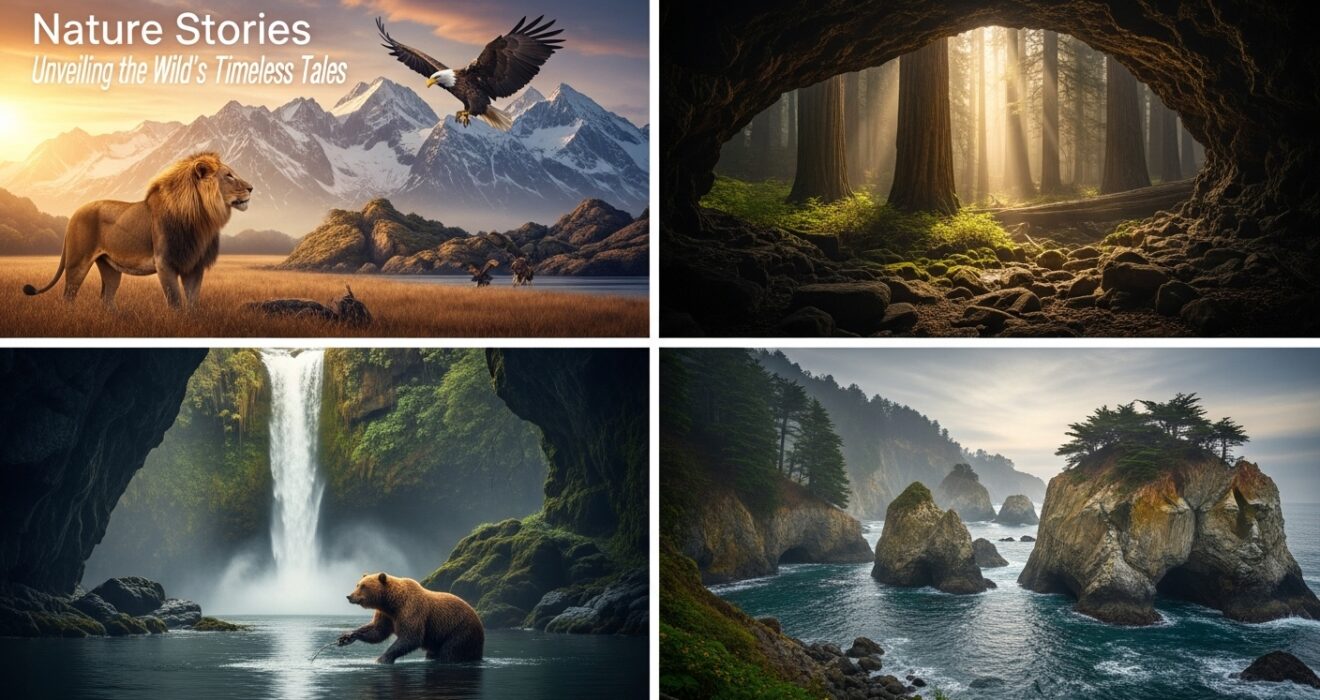
Nature stories: Unveiling the Wild’s Timeless Tales
Nature stories: Unveiling the Wild’s Timeless Tales
“Nature stories” are more than just tales of the wild; they are the narratives that connect humanity to the intricate web of life. For millennia, people have looked to the natural world for inspiration, wisdom, and understanding. Indeed, these stories manifest in countless forms, from ancient myths explaining natural phenomena to modern scientific discoveries. They help us interpret our surroundings. Consequently, they often shape our perception of the environment. This article will explore the profound significance of nature stories, examining their historical context, diverse forms, and lasting impact on our relationship with the planet. Ultimately, we will discover how these narratives continue to inspire wonder, foster empathy, and drive conservation efforts.
The Enduring Power of Nature Stories
Stories about nature possess a unique ability to resonate deeply within us. They tap into universal themes of life, death, struggle, and survival. Moreover, they often reflect our own human experiences through the lens of the natural world. Therefore, understanding their enduring power is crucial.
Ancient Roots: Myths, Legends, and Folklore
Long before scientific inquiry, humanity sought to comprehend the mysteries of the universe through narrative. Ancient cultures, for instance, wove elaborate myths and legends around celestial bodies, powerful animals, and dramatic landscapes. These early nature stories explained the changing seasons, the origins of species, and the forces of nature. Consider the indigenous tales of creation, which often feature animal spirits or natural elements as central characters. Such narratives provided moral guidance, cultural identity, and a framework for understanding one’s place within the ecosystem. Consequently, they fostered a deep respect for the environment. These stories were not mere entertainment; rather, they were vital tools for survival and cultural transmission.
Scientific Narratives: Understanding the Natural World
In modern times, the pursuit of knowledge has led to a different kind of nature story: the scientific narrative. Scientists, through rigorous observation and experimentation, unravel the complex processes of the natural world. They tell stories of evolution, migration, ecological succession, and climate change. For example, the discovery of DNA structure is a compelling narrative of scientific endeavor. Similarly, tracking the migratory patterns of birds reveals incredible feats of endurance and navigation. These scientific nature stories are often presented in journals, documentaries, and educational programs. They provide factual insights. Furthermore, they deepen our appreciation for the intricate mechanisms that govern life on Earth. Thus, they complement the wisdom found in ancient folklore.
Personal Journeys: Connection and Reflection
Beyond grand myths and scientific facts, many nature stories emerge from individual experiences. These personal journeys involve people connecting with nature on a profound level. Think of naturalists like John Muir, whose writings describe his spiritual connection to the wilderness. Similarly, countless hikers, gardeners, and birdwatchers find personal meaning in their interactions with the natural world. Their observations become personal narratives. These stories often reflect moments of awe, tranquility, or even challenge. They remind us that nature is not just something “out there”; instead, it is an integral part of our inner landscape. Therefore, sharing these personal nature stories can inspire others to seek similar connections.
Crafting Compelling Nature Narratives
Creating effective nature stories requires more than just recounting events. It demands keen observation, empathy, and skillful storytelling. The goal is to transport the audience, making them feel a connection to the subject.
Observation: The Foundation of Every Tale
Every great nature story begins with careful observation. This involves more than simply looking; it means seeing, listening, and sensing the environment around you. Pay attention to details: the subtle shift in light, the distinct call of a bird, the texture of bark, or the intricate pattern of a spider’s web. Journaling observations can be incredibly helpful. Furthermore, spending extended periods in a natural setting allows for deeper insights. For instance, watching a particular animal over several days or weeks can reveal complex behaviors and relationships. Only through such dedicated attention can one gather the raw material for a rich narrative.
Empathy: Giving Voice to the Wild
While nature stories are about the natural world, they often resonate most deeply when they evoke empathy. This does not mean anthropomorphizing animals excessively. Rather, it involves understanding the challenges, adaptations, and intrinsic value of living things. Consider the struggles a migrating salmon faces or the intricate cooperation within an ant colony. By highlighting these aspects, storytellers can help audiences connect emotionally with the subjects. This connection, in turn, fosters a sense of shared experience. Ultimately, it encourages a greater appreciation for biodiversity.
Storytelling Techniques: Engaging Your Audience
Once observations are gathered and empathy is established, effective storytelling techniques come into play.
- Character: Even in nature stories, characters are crucial. These could be specific animals, a particular tree, or even a landscape itself. Give them defining characteristics.
- Setting: Describe the environment vividly. Use sensory details to immerse the reader or listener. What does it smell like after rain? What sounds echo through the forest at dusk?
- Plot: While not always a dramatic arc, there should be a progression. This might be the life cycle of a plant, the journey of an animal, or the seasonal changes in a habitat. Conflict and resolution can also be subtle, such as a bird’s struggle to find food.
- Theme: What larger message or idea does the story convey? Is it about resilience, interdependence, beauty, or loss? A clear theme makes the story more impactful.
- Pacing: Vary sentence length and structure to maintain interest. Build suspense where appropriate.
- Show, Don’t Tell: Instead of stating “the forest was alive,” describe the buzzing insects, the rustling leaves, and the chirping birds.
These elements combine to create a narrative that is both informative and captivating.
Different Forms of Nature Stories
The versatility of nature stories allows them to be conveyed through various mediums, each offering a unique way to engage with the natural world. Consequently, they reach diverse audiences.
Written Word: Books, Articles, and Blogs
The written word remains a powerful vehicle for nature stories. From classic works by Henry David Thoreau and Rachel Carson to contemporary nature writing, books and articles offer in-depth exploration. Blogs provide a more immediate platform for sharing observations and personal reflections. These formats allow for detailed descriptions, complex ideas, and the crafting of nuanced narratives. Furthermore, they enable readers to engage at their own pace. A well-written piece can transport the reader to remote landscapes or reveal the hidden wonders of a backyard garden.
Visual Media: Documentaries and Photography
Visual media brings nature stories to life in a dynamic way. Documentaries, such as those from BBC Earth or National Geographic, offer breathtaking footage and expert narration. They allow viewers to witness animal behaviors, ecological processes, and stunning landscapes firsthand. Photography, similarly, captures fleeting moments of beauty, struggle, and grace. A single powerful image can convey an entire narrative without words. Both mediums are incredibly effective at evoking emotion and fostering a visual connection to the natural world. They overcome language barriers, thus reaching a global audience.
Oral Traditions: Campfire Tales and Guided Tours
Before widespread literacy, oral traditions were the primary means of transmitting nature stories. Today, these traditions persist in many forms. Campfire tales, for instance, often feature local wildlife or mysterious natural phenomena. Guided tours in national parks or nature reserves rely on expert storytellers to highlight ecological facts and historical narratives. These direct, personal interactions create an immersive experience. Listeners can ask questions and engage directly with the storyteller. Therefore, oral nature stories foster a sense of community and shared discovery.
The Impact of Nature Stories on Conservation
Perhaps the most significant role of nature stories lies in their capacity to inspire and inform conservation efforts. They bridge the gap between scientific data and public understanding.
Inspiring Environmental Stewardship
Stories have an unparalleled ability to move people to action. When individuals hear compelling narratives about endangered species or threatened habitats, they often feel a personal call to protect them. For example, the story of the California condor’s near extinction and subsequent recovery is a powerful testament to conservation efforts. Such stories highlight both the vulnerability of nature and the potential for human intervention to make a positive difference. Consequently, they motivate people to support conservation organizations, adopt sustainable practices, and advocate for environmental policies.
Fostering Empathy for Wildlife and Ecosystems
Empathy is a cornerstone of conservation. Nature stories cultivate this empathy by allowing audiences to see the world from a non-human perspective. They illuminate the intricate relationships between species and the vital roles each plays within an ecosystem. When we understand the life of a bee or the journey of a monarch butterfly, we begin to care about their survival. This emotional connection transcends mere facts. It fosters a deep-seated respect for all forms of life. Therefore, it encourages a shift from exploitation to coexistence.
Educating Future Generations
Passing on an appreciation for nature is essential for long-term conservation. Nature stories are an excellent tool for educating children and young adults. Books, animated films, and educational programs introduce complex ecological concepts in an accessible and engaging manner. Children who grow up hearing tales of resilient wildlife or the wonders of the rainforest are more likely to develop a lifelong commitment to environmental protection. Furthermore, these stories often instill values of responsibility and interconnectedness. Thus, they prepare future generations to be stewards of the planet.
How to Find and Share Your Own Nature Stories
Everyone has the potential to discover and share compelling nature stories. It simply requires a shift in perspective and a willingness to engage with the world around you.
Exploring Local Ecosystems
You don’t need to travel to exotic locales to find amazing nature stories. Your local park, backyard, or even a window box can be a source of endless wonder. Take time to observe the birds, insects, and plants that thrive in your immediate environment. What are their routines? How do they interact? Consider the seasonal changes. Furthermore, visit local nature preserves or botanical gardens. These places offer curated experiences and opportunities to learn from experts. Often, the most profound stories are found close to home.
Journaling Your Observations
Keeping a nature journal is an excellent way to cultivate observation skills and develop your storytelling voice. Record what you see, hear, smell, and feel. Sketch plants and animals. Write down questions that arise. Over time, these entries will become a rich archive of your personal experiences and insights. They can serve as the raw material for written pieces, oral presentations, or even visual art. The act of journaling itself deepens your connection to nature. It trains you to notice the subtle narratives unfolding daily.
Engaging with Community Groups
Sharing your nature stories, and hearing those of others, can be a rewarding experience. Join local hiking clubs, birdwatching groups, or conservation organizations. Participate in guided walks or workshops. These communities provide opportunities for learning, discussion, and collaborative storytelling. Furthermore, consider volunteering for a local environmental project. Direct involvement often leads to powerful personal narratives. Sharing these stories helps build a collective appreciation for the natural world. It reinforces the idea that we are all part of a larger ecosystem.
Conclusion
Ultimately, nature stories serve as vital threads connecting humanity to the planet. From ancient myths that shaped early civilizations to modern scientific accounts unveiling ecological complexities, these narratives inspire, educate, and motivate. They foster empathy, encourage stewardship, and provide a framework for understanding our place within the grand tapestry of life. By continuing to observe, share, and cherish these timeless tales, we not only preserve the stories themselves but also strengthen our commitment to protecting the natural world for generations to come.
If you want to read more about Nature visit this Page. Or visit us at Pintrest.
Frequently Asked Questions (FAQ)
Q1: Why are nature stories important for conservation?
A1: Nature stories are crucial for conservation because they make complex environmental issues relatable and emotionally resonant. They inspire empathy for wildlife and ecosystems, motivating individuals to support conservation efforts, adopt sustainable practices, and advocate for policies that protect the natural world.
Q2: How can I start finding my own nature stories?
A2: Begin by exploring your local environment, such as parks, gardens, or even your backyard. Pay close attention to the small details, like the behavior of insects or the growth of plants. Keeping a nature journal to record your observations, questions, and feelings is an excellent way to develop your storytelling skills and deepen your connection to nature.
Q3: Do nature stories have to be scientific or factual?
A3: Not necessarily. While scientific narratives provide crucial factual understanding, nature stories can also encompass ancient myths, personal reflections, and artistic interpretations. The key is to convey a sense of wonder, connection, or insight into the natural world, regardless of whether it’s a factual account, a traditional legend, or a personal experience.