
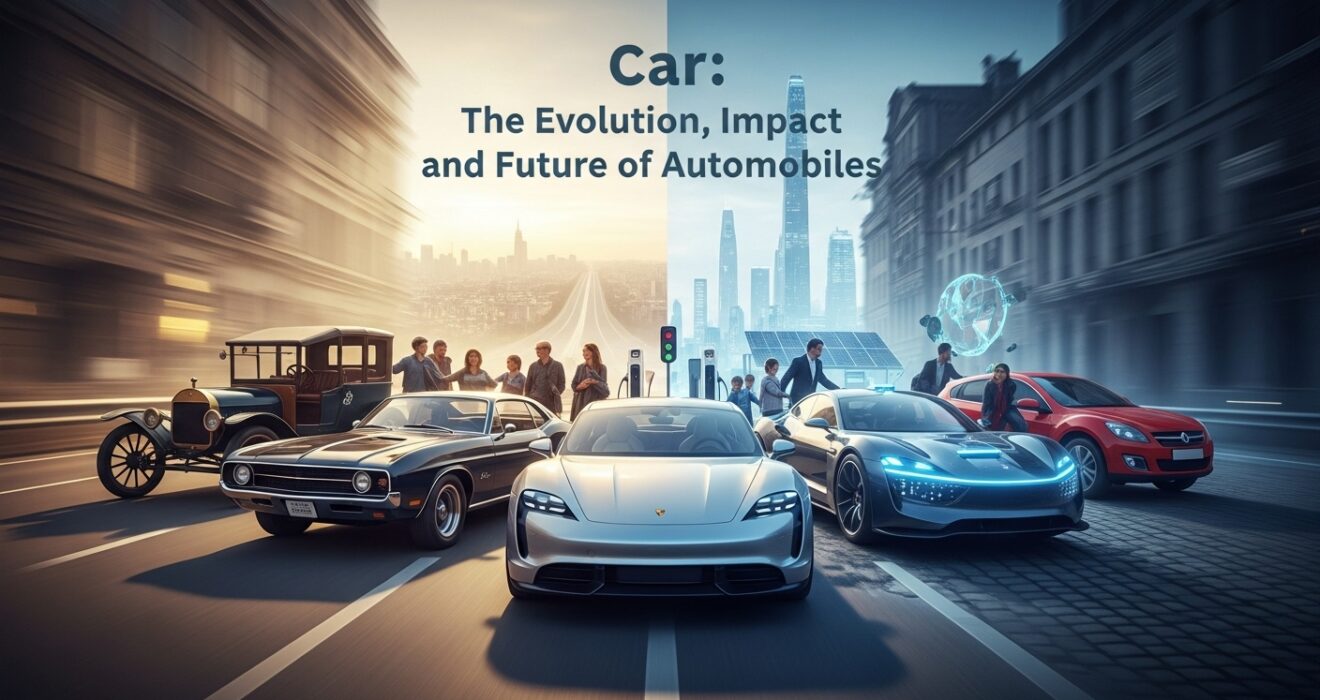
Car: The Evolution, Impact, and Future of Automobiles
The car stands as one of humanity’s most transformative inventions. It reshaped societies, economies, and individual lives on an unprecedented scale. From its rudimentary beginnings to today’s sophisticated machines, the evolution of the automobile is a testament to human ingenuity and persistent innovation. This article delves into the fascinating journey of the car, exploring its historical development, current state, profound societal impact, and the exciting innovations poised to define its future. Understanding the car means understanding a significant chapter in modern history, one that continues to unfold with remarkable speed.
The Dawn of the Automobile: A Brief History of the Car
The concept of a self-propelled vehicle captivated inventors for centuries. Early attempts often relied on steam power, with notable examples like Nicolas-Joseph Cugnot’s steam-powered artillery tractor. However, the true genesis of the modern car began with the development and refinement of the internal combustion engine in the late 19th century. This technological breakthrough paved the way for a practical, personal automobile, setting the stage for a new era of transportation.
Early Innovations and Pioneers
Karl Benz is widely credited with inventing the first practical automobile. In 1886, he unveiled his Benz Patent-Motorwagen, a three-wheeled vehicle. Consequently, this invention marked a pivotal moment in transportation history. It was powered by a single-cylinder, four-stroke engine, which Benz designed specifically for his vehicle, earning him the first patent for a gas-powered car. Shortly thereafter, other German engineers like Gottlieb Daimler and Wilhelm Maybach made significant contributions, developing their own four-wheeled vehicles. These early models were largely luxury items, therefore, inaccessible to the average person. They represented a significant technological leap nonetheless, demonstrating the viability and potential of motor transport.

Mass Production and Accessibility
The early 20th century brought about a revolution in manufacturing that profoundly changed the automotive industry. Henry Ford’s introduction of the assembly line at his Highland Park plant in 1913 was a game-changer. His iconic Model T, launched in 1908, became the first truly affordable car. Consequently, it put America on wheels, moving from a luxury item to a necessity for many. This innovation dramatically reduced production costs and assembly time. Furthermore, standardized parts and efficient production methods meant the Model T became widely accessible. The accessibility of the car sparked widespread social and economic changes, facilitating suburban growth, encouraging tourism, and creating new industries. It also laid the groundwork for the global automotive industry, influencing manufacturing practices worldwide.
The Modern Car: Types and Technologies
Today’s automotive landscape is incredibly diverse, offering a vast array of vehicles designed for various purposes and preferences. The modern car incorporates an impressive suite of advanced technologies, significantly enhancing performance, safety, comfort, and environmental efficiency. This continuous innovation reflects consumer demand and regulatory pressures for better, safer, and greener transportation solutions globally.
Diverse Vehicle Categories
The market now features numerous types of cars, each catering to specific consumer needs. For instance, traditional sedans remain popular for daily commuting and executive travel, offering a balanced blend of comfort and fuel efficiency. SUVs and crossovers, on the other hand, have seen a massive surge in popularity. They offer versatility, increased cargo space, and often all-wheel drive, making them suitable for families and varied terrains. Minivans, while less fashionable, still cater effectively to larger families, providing unparalleled passenger and cargo capacity. Sports cars prioritize performance and driving dynamics. Furthermore, robust pickup trucks serve both utility and personal transport needs. Each category addresses specific consumer demands, ensuring a broad choice for every lifestyle.

Powertrain Innovations: From ICE to Electric
Traditionally, the internal combustion engine (ICE), fueled by gasoline or diesel, powered the vast majority of cars. However, this paradigm is rapidly changing due to environmental concerns and advancements in alternative propulsion. Hybrid electric vehicles (HEVs) combine a gasoline engine with an electric motor, offering improved fuel efficiency. Plug-in hybrid electric vehicles (PHEVs) extend this concept, allowing the car to run on electricity alone for a significant range. Moreover, battery electric vehicles (BEVs) are gaining significant traction, running solely on electricity with zero tailpipe emissions. This shift towards electrification is not only driven by environmental concerns but also by advancements in battery technology, charging infrastructure, and government incentives. Consequently, it promises a cleaner, more sustainable future for the car.
Safety and Connectivity Features
Modern cars are equipped with an impressive and ever-expanding suite of safety features designed to protect occupants and prevent accidents. Basic systems like anti-lock braking systems (ABS), electronic stability control (ESC), and multiple airbags are now standard. Advanced Driver-Assistance Systems (ADAS) further enhance safety by actively assisting the driver. These include adaptive cruise control, lane-keeping assist, and automatic emergency braking. In addition, connectivity features are becoming ubiquitous, transforming the driving experience. Infotainment systems offer navigation, media playback, and smartphone integration (Apple CarPlay, Android Auto). Wi-Fi hotspots, remote vehicle access, and over-the-air software updates further keep drivers and passengers connected and enhance vehicle functionality. This integration of technology not only improves safety but also makes the car a more comfortable and intuitive space.
The Societal and Economic Impact of the Car
The introduction and widespread adoption of the car brought about monumental changes across the globe. It influenced urban planning, economic development, social structures, and individual lifestyles profoundly, becoming an indispensable part of modern society.

Reshaping Cities and Lifestyles
The carfundamentally altered urban design and development patterns. Cities expanded outwards, leading to the rise of suburbs as people could commute longer distances to work. This decentralization reshaped communities and created a car-dependent culture. Moreover, the automobile provided unprecedented personal freedom and mobility. Individuals could travel further and more frequently, accessing a wider range of jobs, educational institutions, and recreational opportunities. This newfound mobility fostered a sense of independence. However, it also led to increased traffic congestion, urban sprawl, and the significant need for extensive road infrastructure, including highways and parking lots. The way we live, work, and socialize largely depends on the car, making it a central element in contemporary life.
Economic Driving Force
The automotive industry is a colossal economic engine, supporting millions of jobs globally. This encompasses not only the direct manufacturing of vehicles but also extensive networks for sales, marketing, maintenance, and parts supply. The production and sale of every new car ripple through numerous allied industries, including steel, aluminum, rubber, plastics, glass, textiles, electronics, and software development. Furthermore, the oil and gas industry has historically been inextricably intertwined with car dependency, supplying the fuel for internal combustion engines. This vast ecosystem generates significant tax revenues and drives innovation in materials science and engineering. Even with the shift towards electric vehicles, the core economic impact of the car remains undeniable and far-reaching.
Environmental Considerations
While the car offers immense convenience and economic benefits, it also presents significant environmental challenges. Traditional gasoline-powered vehicles emit greenhouse gases, such as carbon dioxide, which contribute to climate change. They also release pollutants like nitrogen oxides and particulate matter, leading to air quality issues in urban areas. Consequently, there’s a growing imperative for more sustainable transportation solutions globally. The rise of electric vehicles (EVs) is a direct and crucial response to these concerns. Governments and manufacturers are investing heavily in greener technologies, stricter emission standards, and the development of renewable energy sources to power these vehicles. The long-term goal is to reduce the carbon footprint associated with the car to mitigate its environmental impact.
The Future of the Car: Innovation on the Horizon
The automotive industry is currently on the cusp of another transformative era. Emerging technologies, shifting consumer preferences, and global environmental mandates promise to redefine what a car is, how we interact with it, and its role in our daily lives. This next wave of innovation will bring about fundamental changes to personal mobility.
Autonomous Driving: A New Era
Self-driving cars, or autonomous vehicles (AVs), represent a significant leap forward in automotive technology. These vehicles utilize an intricate array of sensors, cameras, radar, lidar, and artificial intelligence to perceive their surroundings and navigate without human intervention. The potential benefits of widespread AV adoption are enormous. They include increased safety by eliminating human error, reduced traffic congestion through optimized routing, and greater accessibility for those unable to drive. However, significant challenges remain, such as developing robust regulatory frameworks, addressing complex ethical dilemmas, and fostering public trust and acceptance. The fully autonomous car is still some years away from mass market deployment, but progress in this field is rapid and continuous.
Electrification and Sustainability
The shift towards electric vehicles (EVs) will continue to accelerate, becoming the dominant powertrain technology in the coming decades. Battery technology is constantly improving, offering longer ranges, faster charging times, and greater energy density. Furthermore, hydrogen fuel cell vehicles (FCVs) are another promising zero-emission alternative, particularly for heavier vehicles. The focus on sustainability extends beyond the vehicle itself. It also encompasses the entire energy ecosystem, including sourcing renewable energy for charging, sustainable manufacturing processes, and responsible recycling of batteries. The future car will undoubtedly be cleaner, more energy-efficient, and integrated into a broader green energy infrastructure. This commitment to sustainability is central to the industry’s long-term vision.
Connected Car Ecosystems
Future cars will be deeply integrated into a broader digital ecosystem, fundamentally changing the driving and ownership experience. Vehicle-to-vehicle (V2V) communication will allow cars to share real-time data on speed, braking, and road conditions, thus enhancing safety and traffic flow. Similarly, vehicle-to-infrastructure (V2I) communication will enable cars to interact with smart city infrastructure, such as traffic lights and road sensors, further optimizing routes and reducing congestion. Moreover, cars will offer highly personalized experiences, learning driver preferences, integrating seamlessly with smart homes and personal devices, and providing advanced infotainment options. The connected car will evolve into a sophisticated mobile hub for information, entertainment, and productivity.
Urban Mobility Solutions
As global urban populations continue to grow, new and innovative mobility solutions are emerging to complement or even partially replace traditional car ownership. Car-sharing services, ride-hailing platforms, and micro-mobility options (e.g., electric scooters and bicycles) offer flexible alternatives for short-distance travel. Autonomous shuttles and on-demand transit systems could further reduce the need for private vehicles in dense urban areas, offering efficient and convenient public transport options. The future of the car in cities may involve a blend of personal ownership, shared services, and integrated public transit. This aims to create more efficient, sustainable, and less congested transportation networks, adapting to the evolving needs of urban dwellers and promoting a more holistic approach to mobility.
Conclusion
The car has undergone an extraordinary transformation, evolving from a luxury novelty to an indispensable component of global infrastructure and personal freedom. Its journey from Karl Benz’s first patent to today’s electric, connected, and increasingly autonomous vehicles reflects continuous human innovation. While the automobile has profoundly shaped our cities, economies, and lifestyles, it has also presented challenges, particularly concerning environmental impact. However, the future of the car is bright, driven by a commitment to sustainability, advanced safety features, and intelligent connectivity. As technology progresses, the car will continue to adapt, offering cleaner, safer, and more integrated mobility solutions that promise to enhance our lives in new and exciting ways.
Frequently Asked Questions (FAQ)
Q1: When was the first car invented?
A1: Karl Benz invented the first practical automobile, the Benz Patent-Motorwagen, in 1886. This three-wheeled vehicle, powered by a single-cylinder internal combustion engine, is widely recognized as the world’s first true car.
Q2: What are the main types of modern cars available today?
A2: Modern cars come in various types, including sedans, SUVs (Sport Utility Vehicles), crossovers, minivans, sports cars, and pickup trucks. Additionally, powertrains now include traditional internal combustion engines (ICE), hybrid electric vehicles (HEVs), plug-in hybrid electric vehicles (PHEVs), and battery electric vehicles (BEVs).
Q3: How is the car industry addressing environmental concerns?
A3: The car industry is addressing environmental concerns primarily through electrification. This involves developing and promoting hybrid, plug-in hybrid, and fully electric vehicles (BEVs). Furthermore, manufacturers are investing in hydrogen fuel cell technology, improving fuel efficiency in ICE vehicles, and focusing on sustainable manufacturing processes and battery recycling to reduce the overall carbon footprint of the car.