
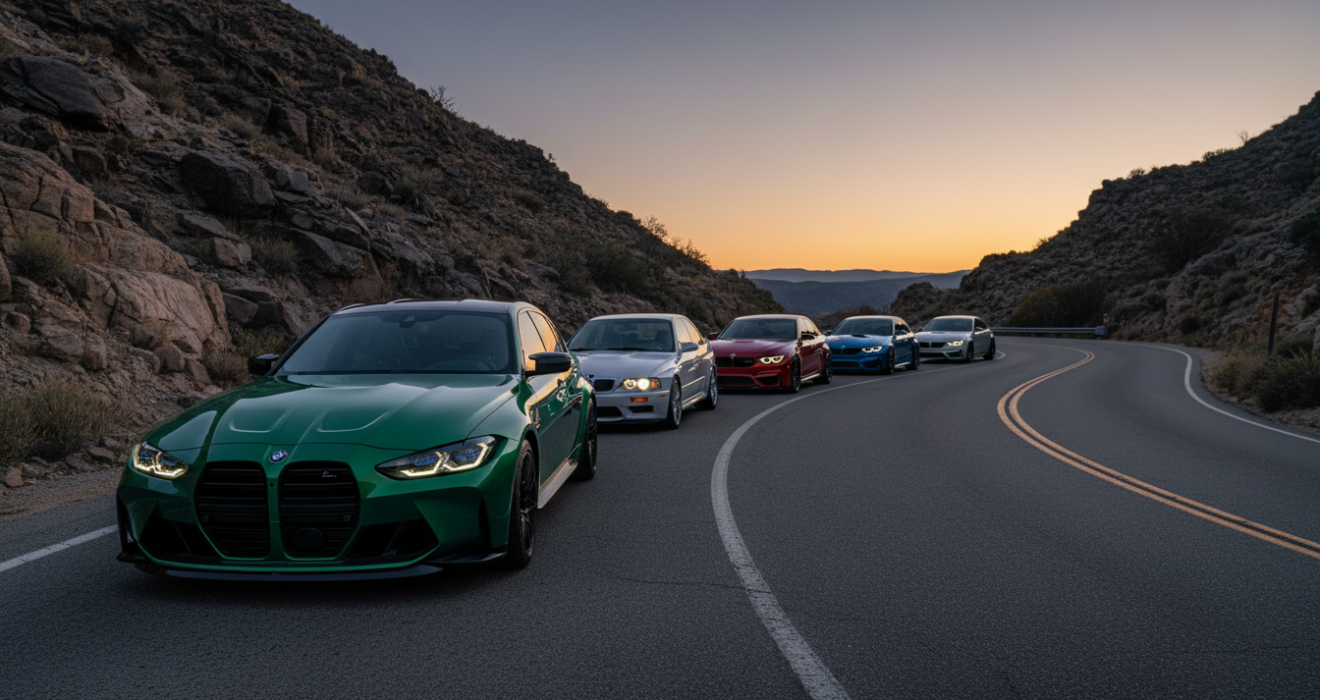
BMW M3 Deep Dive: Evolution, Performance,Ownership Guide
There are few vehicles in the automotive pantheon that evoke as much passion, debate, and adrenaline as the BMW M3. For over three decades, this nameplate has defined the sports sedan segment, serving as the benchmark against which all challengers are measured. From my perspective behind the wheel, the M3 is not merely a car; rather, it is a philosophy of engineering that prioritizes driver engagement above all else. However, understanding the nuance of each generation requires more than just a glance at a spec sheet.
Consequently, in this comprehensive analysis, we will explore the lineage, the mechanical brilliance, and the driving dynamics that make the BMW M3 an icon. Furthermore, we will delve into the practicalities of ownership, ensuring you have the necessary information to navigate the market. Whether you are a seasoned collector or an aspiring owner, this guide provides the information gain required to truly appreciate Bavaria’s finest.
Executive Summary: The BMW M3 at a Glance
Before we dive into the deep history and technical specifications, it is beneficial to review the core statistics that define the current landscape of the M3. Specifically, the following table breaks down the critical metrics of the latest generation compared to its immediate predecessor, illustrating the leap in performance.
| Feature | F80 M3 (Previous Gen) | G80 M3 Competition (Current Gen) |
|---|---|---|
| Engine Code | S55 Twin-Turbo Inline-6 | S58 Twin-Turbo Inline-6 |
| Horsepower | 425 hp @ 5500 rpm | 503 hp @ 6250 rpm |
| Torque | 406 lb-ft | 479 lb-ft |
| 0-60 MPH | 3.9 Seconds | 3.4 Seconds (xDrive) |
| Drivetrain | RWD | RWD / M xDrive (AWD) |
| Transmission | 6-Speed Manual / 7-Speed DCT | 6-Speed Manual / 8-Speed ZF Auto |
As illustrated above, the jump in performance is substantial. However, raw numbers only tell half of the story. The soul of the machine is found in how it delivers that power.
The Legacy of the BMW M3: From E30 to G80
To truly understand where we are, we must undoubtedly look back at where we started. The history of the BMW M3 is a timeline of automotive innovation. Initially, the M3 was born out of a necessity to go racing. Under Group A homologation rules, BMW Motorsport needed a road-going version of their touring car racer. Thus, the legend was born.
The Genesis: E30 M3
Launched in 1986, the E30 M3 was a revelation. Unlike its successors, it was powered by a four-cylinder engine, the S14. Although it lacked the cylinder count of later models, it made up for it with lightness and agility. Furthermore, the E30 featured box-flared fenders and a distinct lack of sound deadening, making it a raw, visceral experience. Having driven an E30 on winding canyon roads, I can attest that the steering feedback is telepathic. It doesn’t overpower you; rather, it dances with you.
Historically, this model set the template. It established the M3 as a car that could be driven to the track, raced hard, and driven home. For enthusiasts looking to understand the roots of performance sedans, reading archival reviews on BMW M’s official heritage page provides incredible context on how this car changed the world.
The E36: Democratizing Power
Subsequently, the E36 arrived in the 1990s. This generation introduced the inline-six engine to the M3 lineage, a configuration that many consider the “correct” layout for a BMW. While the US version was infamously detuned compared to its European counterpart, the E36 was significantly more refined. It bridged the gap between a track toy and a daily driver. Moreover, it introduced the M3 Sedan, proving that four doors did not have to mean boring.
The E46 BMW M3: A Modern Classic
If you ask a room full of enthusiasts which M3 is the greatest, a significant percentage will shout “E46!” without hesitation. Produced from 2000 to 2006, this generation is often cited as the perfect balance of analog feel and modern performance. Central to its appeal is the S54 engine. This naturally aspirated 3.2-liter inline-six revs to 8,000 RPM and produces a metallic rasp that is instantly recognizable.
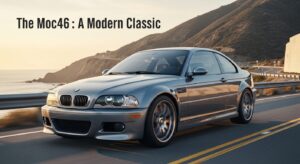
During my ownership of an E46, I found the chassis balance to be sublime. The hydraulic steering rack provides feedback that modern electric systems struggle to replicate. However, it is not without its faults. Issues such as subframe cracking and VANOS failures are well-documented. Nevertheless, the driving experience is so rewarding that owners happily overlook these maintenance hurdles. Ideally, if you are in the market for a classic sports car, the E46 represents the peak of the analog era.
V8 Power: The E90/E92 Era
In a move that surprised the world, BMW stuffed a V8 engine into the M3 for the E90/E92 generation. The S65 4.0-liter V8 was essentially a slice of the V10 found in the M5. Consequently, this engine characterizes the car completely. With a redline of 8,400 RPM, the auditory experience is nothing short of exotic. It screams like a race car, because, essentially, it is one.
Furthermore, this generation marked the introduction of the Dual Clutch Transmission (DCT), which offered lightning-fast shifts. While the manual transmission remained an option, the DCT suited the high-revving nature of the V8 perfectly. However, the trade-off was fuel consumption. This car drinks fuel at an alarming rate. Yet, for the smiles it delivers, most owners find it a worthy expense. The E92 coupe, specifically, has aged beautifully, with aggressive lines that still look modern today.
Forced Induction and the F80 M3
With tightening emissions regulations, BMW made the controversial switch to turbocharging with the F80 generation. The S55 engine brought massive torque figures, solving the “lack of low-end grunt” complaint leveled at previous generations. Suddenly, the M3 was a torque monster. In fact, early models were known to be quite snappy at the limit, requiring a skilled hand to manage traction.
Moreover, the F80 utilized extensive carbon fiber, including the driveshaft and roof, to keep weight down. This focus on lightweight materials helped maintain agility despite the increase in size. In addition, the wide hips of the F80 sedan gave it a stance that is arguably one of the most aggressive in the model’s history. For detailed performance metrics and instrumented testing of this turbo era, Car and Driver’s archives offer excellent data points comparing the F80 to its competition.
The G80 BMW M3: Controversy and Performance
This brings us to the current generation: the G80. When this car was unveiled, the internet exploded—and not entirely in a good way. The vertical kidney grilles were a radical departure from tradition. However, once you look past the nose, the engineering underneath is undeniable. The S58 engine is a masterpiece of modern engineering, capable of producing over 500 horsepower in Competition trim.
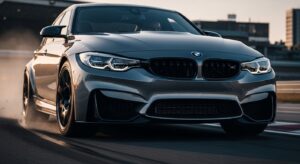
Significantly, this is the first M3 to offer xDrive all-wheel drive. For purists, this was heresy. For drivers living in snowy climates, it was a revelation. The xDrive system is rear-biased and can even be switched to a pure RWD mode for drifting antics. Consequently, the G80 is a 3-second car to 60 mph that can be driven year-round. The level of grip is simply astonishing. During track testing, the front end bite is immediate, eliminating the understeer that plagues many AWD performance cars.
Interior and Technology
Inside the G80, the game has moved forward significantly. The optional carbon bucket seats are not only supportive but look like sculptures. Furthermore, the iDrive system is intuitive, though the sheer number of configurable settings for the engine, chassis, steering, and brakes can be overwhelming. You can store your favorite setups on the M1 and M2 buttons on the steering wheel, a feature that allows you to switch from “Comfort” to “Attack Mode” in a millisecond.
If you are looking for more insights on luxury vehicles and automotive lifestyle beyond just the technical specs, I highly recommend exploring the resources at Bliss Lifes. Their coverage often bridges the gap between raw performance data and the actual experience of living with high-end machinery. For the other information about the BME car visit this blog BMW.
Driving Dynamics and Handling
Regardless of the generation, the hallmark of a BMW M3 is its handling. It is the gold standard for a reason. The suspension tuning is firm, communicating every ripple in the road to the driver. While this can be tiresome on a commute, it is essential for high-speed stability. In addition, the 50/50 weight distribution inherent in the 3 Series platform provides a neutral balance that inspires confidence.
Moreover, the differential plays a huge role. The Active M Differential in modern M3s electronically controls the locking degree between the rear wheels. This means the car can lock the diff for maximum traction out of a corner or open it up for stability. Therefore, the car feels smaller than it actually is. It rotates around the driver, pivoting with precision that few sedans can match.
Ownership Costs and Reliability of the M3
Buying a BMW M3 is one thing; keeping it on the road is another. It is crucial to understand that these are high-performance machines requiring strict maintenance schedules. You cannot treat an M3 like a standard Corolla. Oil changes, spark plugs, and brake components are significantly more expensive.
- Rod Bearings: On E46 and E92 models, rod bearings are considered a consumable item. Replacing them preventatively is highly recommended.
- Crank Hub: On the F80’s S55 engine, the spun crank hub is a known fear, though it affects a small percentage of stock cars.
- Brakes: If equipped with Carbon Ceramic brakes, replacement rotors can cost thousands of dollars. Steel brakes are far more economical for street use.
Furthermore, tires are a major expense. The rear tires on an M3 will wear out quickly, especially if you enjoy the car’s torque. Budgeting for a new set of Michelins every 10,000 to 15,000 miles is prudent. For parts sourcing, relying on community-trusted vendors is essential. I frequently consult forums like Bimmerpost to find the best deals on OEM parts and to troubleshoot issues with fellow owners.
Modifications and Tuning Culture
The BMW M3 platform is one of the most modified in the world. Because the engines are over-engineered, they respond incredibly well to tuning. A simple ECU reflash on the turbocharged F80 or G80 models can yield gains of 50 to 80 horsepower. However, modifying your car can void the warranty, so proceed with caution.
Additionally, suspension upgrades are popular. KW V3 coilovers or Ohlins Road & Track kits can transform the handling even further. Aesthetically, carbon fiber front lips, diffusers, and spoilers are standard fare at any car meet. The culture surrounding the M3 is vast, with clubs and events worldwide dedicated to this single model.
Conclusion: Is the BMW M3 Right for You?
In conclusion, the BMW M3 remains the definitive sports sedan. It balances the duality of a daily driver and a track weapon better than almost any other car on the market. From the raw, analog feedback of the E30 and E46 to the digital, turbocharged precision of the G80, there is an M3 for every type of enthusiast. However, this performance comes at a price, both in initial purchase and ongoing maintenance.
If you value steering feel, chassis dynamics, and motorsport heritage, the M3 is a bucket-list car. It demands respect and attention, but in return, it offers a driving experience that is truly unparalleled. Whether you choose the screaming V8 of the E92 or the torque-rich inline-six of the G80, you are buying into a legacy of excellence. Ultimately, the M3 is not just a car you drive; it is a car you experience.
Frequently Asked Questions (FAQ)
Which BMW M3 is the best for daily driving?
The G80 M3 (current generation) is arguably the best daily driver due to its adjustable suspension, modern technology, and available xDrive AWD system, making it usable in all weather conditions.
Are BMW M3s reliable?
Generally, the engines are robust, but they require strict adherence to maintenance schedules. Specific generations have specific weak points (e.g., rod bearings in E46/E92), so a pre-purchase inspection is vital.
What is the difference between the M3 and M3 Competition?
The Competition models typically feature more horsepower, stiffer suspension tuning, distinct wheels, and often an automatic transmission (in recent generations), whereas the “base” M3 often retains a manual transmission option.
Does the BMW M3 hold its value?
Yes, M3s generally hold their value better than standard 3 Series models. Limited editions and older generations like the E30 and E46 have actually seen values appreciate significantly in recent years.