
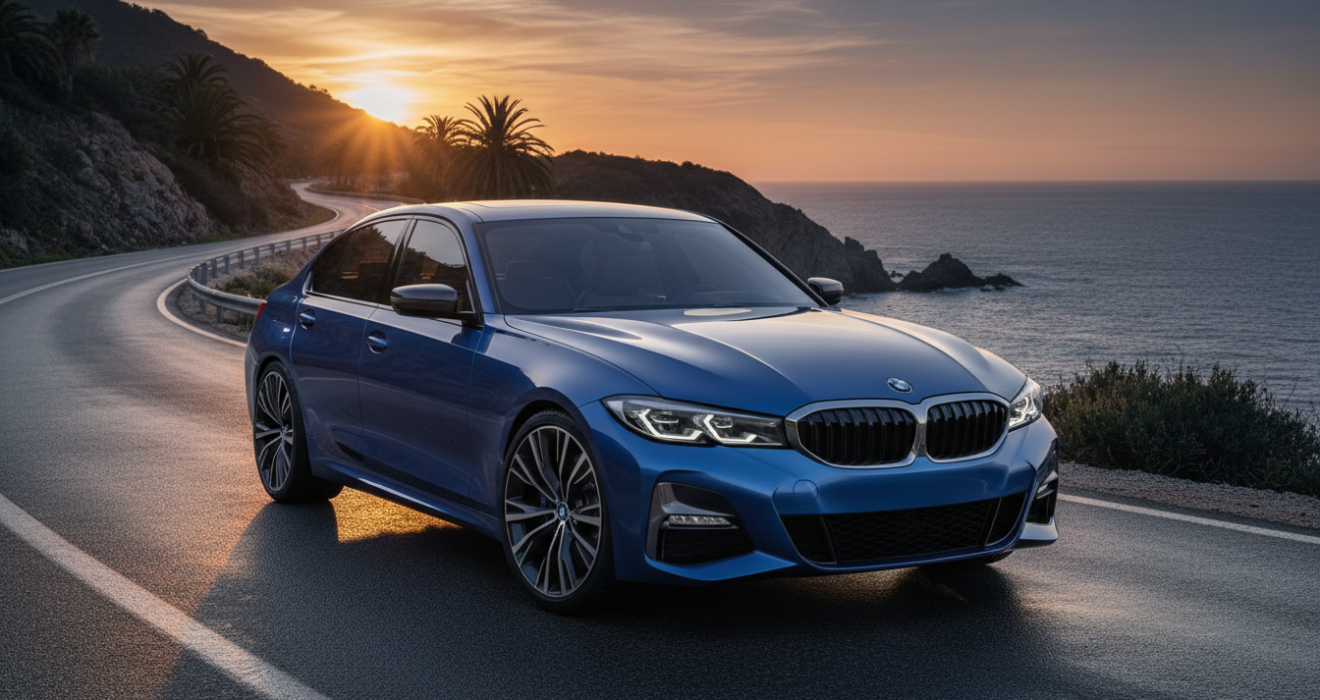
2026 BMW 3 Series Review: The Ultimate Evolution
Having spent the last two decades behind the wheel of nearly every generation of the 3 Series, from the analog purity of the E46 to the technological prowess of the G20, I have witnessed the evolution of the sports sedan firsthand. However, the arrival of the BMW 3 Series 2026 marks a pivotal moment in automotive history. It is not merely an update; rather, it is a complete philosophical bifurcation. For the first time, Bavaria is offering two distinct lineages under the famous “3” badge: a highly evolved combustion model and a revolutionary electric platform known as the Neue Klasse.
Undoubtedly, this strategy is risky. Yet, based on my analysis of the preliminary specs and BMW’s strategic roadmap, it appears to be a masterstroke. In this comprehensive guide, I will walk you through everything we know about the 2026 model, applying critical analysis to its engineering, design, and market positioning.
Executive Summary: The 2026 3 Series at a Glance
Before we delve into the granular details, here is a quick reference guide to the upcoming lineup. Consequently, this table serves as a roadmap for the changes you can expect.
| Feature | Combustion (G50 Platform) | Electric (Neue Klasse / NA0) |
|---|---|---|
| Architecture | Updated CLAR II | Neue Klasse (800V) |
| Powertrains | B48 (4-cyl) & B58 (6-cyl) with 48V Hybrid | Gen 6 eDrive Motors |
| Range / Efficiency | 30-35 MPG (Est.) | 350-500 Miles (Est.) |
| Tech Highlight | Curved Display with iDrive 8.5/9 | Panoramic Vision HUD |
| Expected Release | Late 2026 / Early 2027 | Mid-to-Late 2026 |
The Dual-Platform Strategy Explained
Traditionally, manufacturers build a car and stuff different engines into it. However, the BMW 3 Series 2026 breaks this mold. The gas-powered models will continue on a heavily revised version of the current CLAR architecture. Conversely, the electric version, likely to be badged as the i3 (chassis code NA0), utilizes the dedicated Neue Klasse architecture. Furthermore, this distinction is crucial for buyers to understand because the driving dynamics will differ significantly between the two.
For enthusiasts who fear the death of internal combustion, the G50 generation provides a stay of execution. Ideally, this allows BMW to perfect their electric technology without alienating their core fanbase. If you want to explore more about how other manufacturers are handling this transition, I recommend browsing the extensive catalog at Bliss Lifes Cars, where you can find broader industry trends and reviews.
Exterior Design: A Tale of Two Sedans
When discussing the BMW 3 Series 2026, one must address the elephant in the room: the grille. Historically, the kidney grille has been the brand’s signature. For 2026, the divergence in design between the electric and gas models will be stark. Consequently, visual differentiation will be easier than ever before.
The Neue Klasse Aesthetic
The electric 3 Series draws heavy inspiration from the Vision Neue Klasse concept. Therefore, expect a “phygital” (physical meets digital) front end where the headlights and kidney grille merge into a single, interactive panel. Moreover, the silhouette is expected to be cleaner, devoid of unnecessary character lines, embodying a monolithic design language. The Hofmeister kink remains, but it is sharper, more digital in its execution.
The Evolution of the G50 Combustion Model
In contrast, the combustion-engine BMW 3 Series 2026 will likely retain a more muscular, traditional stance. We anticipate evolved air intakes for cooling the B58 engine and a more aggressive rear diffuser to accommodate exhaust tips—a feature notably absent on the EV. Additionally, the greenhouse will remain upright, prioritizing rear headroom and visibility.
Interior Innovation: The “Panoramic Vision”
Perhaps the most disruptive change in the BMW 3 Series 2026 is the interior interface. Specifically, the Neue Klasse models will introduce “BMW Panoramic Vision.” This technology projects critical information across the entire width of the windscreen. Consequently, the traditional instrument cluster is rendered obsolete.
Having tested current Head-Up Displays (HUDs), I can attest that looking down at a screen distracts from the driving experience. Furthermore, by moving data to the driver’s line of sight, BMW claims safety and engagement will improve. However, adaptation time for drivers accustomed to analog gauges will be a factor.
- Central Display: A non-conformist, parallelogram-shaped screen is rumored.
- Materiality: A move away from leather and chrome toward recycled fabrics and illuminated textiles.
- Steering Wheel: A simplified, possibly flat-bottomed and flat-topped design to aid visibility of the panoramic projection.
For a deeper look into how BMW envisions the future of digital cockpits, you can reference the official press release from the BMW Group PressClub, which details their roadmap for digitalization.
Powertrain and Performance Specs
The heart of any BMW is its engine—or motor. The BMW 3 Series 2026 will offer the widest array of propulsion choices in the segment. Below, we break down what we expect from the engineering teams in Munich.
The Internal Combustion Engines (ICE)
The G50 generation will likely rely on updated versions of the B48 (2.0L Turbo 4-cylinder) and the legendary B58 (3.0L Turbo Inline-6). Moreover, strict Euro 7 emissions standards mean that 48-volt mild-hybrid systems will be standard across the board. Consequently, the start-stop transitions will be smoother, and low-end torque will be instantly available.
- 330i: Expected 260 hp / 300 lb-ft torque.
- M340i xDrive: Expected 390 hp / 375 lb-ft torque.
The Electric Revolution: Gen 6 eDrive
The electric BMW 3 Series 2026 will utilize Gen 6 cylindrical battery cells. These cells differ from the current prismatic cells used in the i4. Specifically, they offer 20% higher energy density and 30% faster charging speeds. Additionally, the 800-volt architecture will allow for charging from 10% to 80% in under 15 minutes.
The efficiency of these new motors is paramount. According to data from the U.S. Department of Energy, electric motor efficiency directly correlates to range anxiety reduction, a key factor for luxury buyers.
Driving Dynamics: The Ultimate Driving Machine?
Can an electric car feel like a 3 Series? This is the question that keeps purists awake at night. However, having driven the current i4 M50, I am optimistic. The BMW 3 Series 2026 on the Neue Klasse platform benefits from a lower center of gravity than any gas car could hope to achieve. Furthermore, BMW is developing a “Heart of Joy”—a centralized control unit that manages powertrain and chassis dynamics up to 10 times faster than current systems.
This integration means the traction control, suspension damping, and power delivery are handled by a single brain. Consequently, the car should feel more cohesive and agile. For the gas models, the focus will remain on mechanical feedback, preserving the hydraulic-like steering feel that fans adore.
Safety and Autonomous Features
The year 2026 brings us closer to Level 3 autonomous driving. The BMW 3 Series 2026 will be equipped with the latest sensor suite, likely including LiDAR for the higher trims. Therefore, hands-free driving on highways at speeds up to 85 mph is a distinct possibility.
Safety is not just about automation; it is about structure. The mixed-material construction of the G50 and NA0 platforms utilizes high-strength steel, aluminum, and carbon fiber reinforced plastic (CFRP). For verified crash test ratings and safety methodologies, the NHTSA provides invaluable data that consumers should consult once the vehicle undergoes official testing.
Market Comparison: 3 Series vs. The World
The compact luxury sedan segment is brutal. To understand the position of the BMW 3 Series 2026, we must compare it to its primary rivals: the Mercedes-Benz C-Class and the Audi A4 (soon to be A5). Moreover, the Tesla Model 3 remains a thorn in the side of legacy automakers.
vs. Mercedes-Benz C-Class
The C-Class has moved entirely to four-cylinder engines, even for the AMG models. In contrast, the BMW 3 Series 2026 retains the inline-six for enthusiasts. This decision alone gives BMW a significant “experience” advantage for buyers valuing acoustic emotion and linear power delivery.
vs. Tesla Model 3
While the Model 3 dominates on price, the Neue Klasse 3 Series aims to dominate on build quality and driving dynamics. Furthermore, the 800V architecture of the BMW will rival the Supercharger network’s speed, neutralizing one of Tesla’s biggest advantages. Additionally, the interior customization options of the BMW will far exceed the minimalist, one-size-fits-all approach of Tesla.
Pricing and Availability
Given the technological leap, price increases are inevitable. We estimate the base combustion BMW 3 Series 2026 to start around $48,000. Conversely, the electric Neue Klasse model will likely command a premium, starting near $55,000.
Pre-orders are expected to open in late 2025. If you are considering a purchase, keeping an eye on automotive trend aggregators like Bliss Lifes can help you time your market entry effectively.
Detailed Look at the M Variant: The Future M3
What about the M3? The high-performance flagship is also undergoing a transformation. Rumors suggest a quad-motor electric M3 is in development, capable of over 1,000 horsepower. However, an inline-six hybrid M3 is also likely to continue alongside it for at least one more generation.
This “choose your fighter” approach ensures that track rats and tech heads are both satisfied. Consequently, the 2027-2028 timeframe will be a golden era for performance sedans.
Chassis Tuning and Suspension
The suspension geometry of the BMW 3 Series 2026 utilizes a double-joint spring strut front axle and a five-link rear axle. For the electric model, air suspension may become standard on higher trims to mask the battery weight. In addition, the use of active anti-roll bars powered by the 48V system will keep the car flat in corners without destroying ride quality.
Sustainability and Materials
BMW is pushing for a circular economy. The BMW 3 Series 2026 is designed to be highly recyclable. The “secondary first” approach means using recycled aluminum and plastics wherever possible. Furthermore, the elimination of chrome and leather in the Neue Klasse models reduces the carbon footprint of production significantly.
Maintenance and Ownership Costs
Owning a German luxury car is often associated with high maintenance costs. However, the electric BMW 3 Series 2026 aims to lower TCO (Total Cost of Ownership). With no oil changes, transmission fluid flushes, or spark plugs, the maintenance schedule is lighter. Conversely, tires and suspension components may wear faster due to the increased weight of the battery pack.
For the combustion models, the B48 and B58 engines have proven to be remarkably reliable. Therefore, routine maintenance should remain consistent with current costs.
Conclusion
The BMW 3 Series 2026 represents a bold step forward. By offering two distinct platforms, BMW is respecting its heritage while aggressively pursuing the future. Whether you choose the visceral engagement of the combustion engine or the futuristic serenity of the Neue Klasse EV, the 3 Series promises to remain the benchmark of the segment.
Ultimately, the choice comes down to your lifestyle. If you are ready for the charging lifestyle and want the latest tech, the Neue Klasse is the winner. However, if you crave the sound of a straight-six and the convenience of gas, the G50 remains the king. In either case, BMW has ensured that the spirit of the ultimate driving machine survives. Foe the other blog like BMW 8.
Frequently Asked Questions (FAQ)
Will the 2026 BMW 3 Series still have a gas engine?
Yes, BMW will continue to produce a gas-powered 3 Series (likely chassis code G50) alongside the new electric model. It will feature updated B48 and B58 engines with mild-hybrid technology.
What is the range of the electric 2026 3 Series?
The electric model, built on the Neue Klasse platform, is expected to offer a range between 350 and 500 miles, depending on the battery configuration and drivetrain (RWD vs. AWD).
When will the 2026 BMW 3 Series be released?
Production is slated to begin in mid-to-late 2026. Expect the vehicles to arrive in US dealerships as 2027 model year vehicles shortly thereafter.
Is the iDrive controller going away in 2026?
In the Neue Klasse electric models, the traditional iDrive rotary controller may be removed in favor of touch, voice, and gesture controls combined with the Panoramic Vision HUD. However, gas models may retain a version of the controller.
How much will the 2026 BMW 3 Series cost?
While official pricing hasn’t been released, estimates suggest a starting price of roughly $48,000 for the gas model and upwards of $55,000 for the electric Neue Klasse variant.