
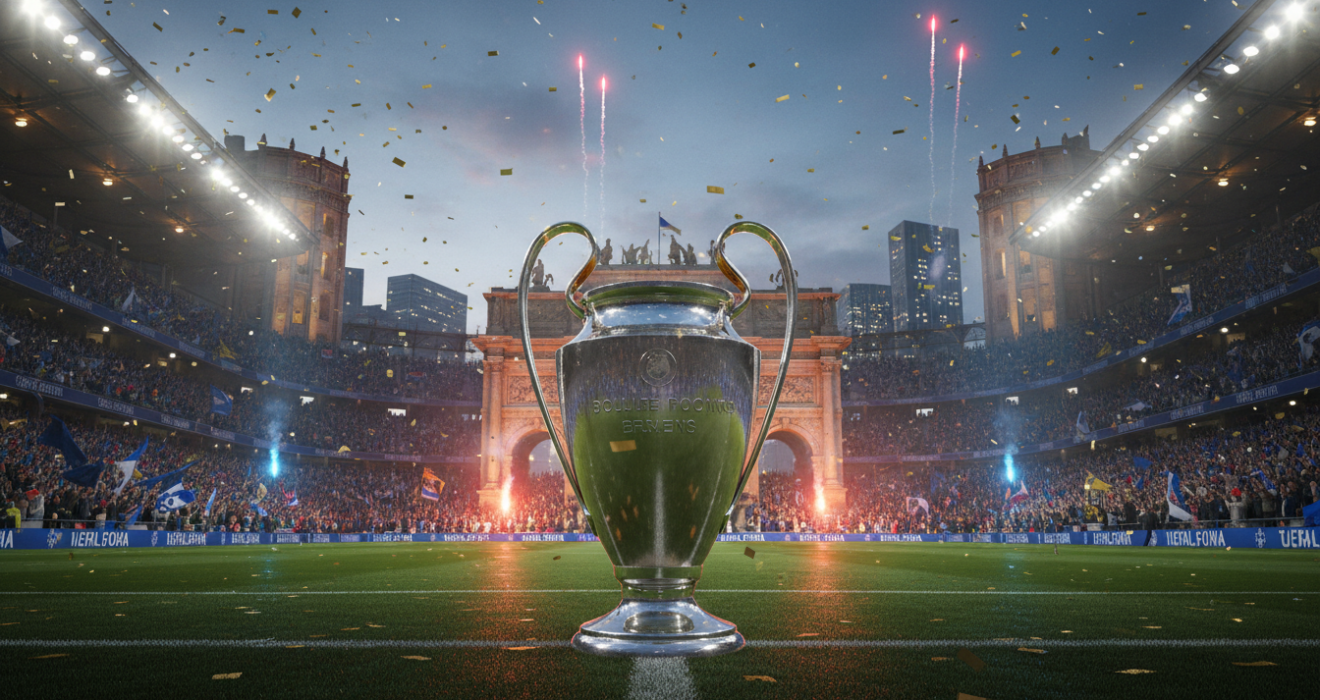
Champions League: The Ultimate Guide to European Glory & History
There is a specific sound that sends shivers down the spine of every football fan. It is not the roar of a specific crowd or the whistle of a referee; rather, it is the grandiose, orchestral swell of the Champions League anthem. Having covered European football for over two decades, I have stood in press boxes from the Allianz Arena to Wembley, and I can attest that the atmosphere on a UCL night is fundamentally different from domestic league fixtures. Furthermore, the sheer weight of history that hangs over this competition elevates every pass, tackle, and goal.
In this comprehensive guide, we will dissect the evolution, the financial power, and the tactical innovations that define the Champions League. Moreover, we will look ahead to the controversial yet intriguing format changes that are reshaping the tournament. Whether you are a casual observer or a die-hard ultra, understanding the intricacies of this tournament is essential for appreciating the pinnacle of the beautiful game.
Executive Summary
| Feature | Details |
|---|---|
| Competition Name | UEFA Champions League (UCL) |
| Founded | 1955 (as European Cup); Rebranded in 1992 |
| Current Holder | Real Madrid (As of latest update) |
| Most Titles | Real Madrid (15) |
| New Format (2024/25) | League Phase (Swiss Model) replacing Group Stage |
| Key Metric | The highest level of club football worldwide |
The Evolution of the Champions League
To truly understand where we are today, we must undoubtedly look back at the origins of this prestigious tournament. Originally known as the European Champion Clubs’ Cup, or simply the European Cup, the competition began in 1955. At that time, it was a straightforward knockout tournament open only to the champions of Europe’s domestic leagues. However, the landscape of football changed drastically over the ensuing decades, necessitating a rebrand.
Consequently, in 1992, the competition was rechristened as the UEFA Champions League. This change was not merely cosmetic; it introduced a group stage and allowed multiple entrants from certain countries, thereby increasing the quality and commercial viability of the tournament. Ideally, this shift ensured that the biggest clubs played each other more frequently, driving up television revenue and global interest.
From the European Cup to the Modern Era
The transition in the early 90s marked the beginning of the commercial behemoth we know today. Initially, purists argued that allowing non-champions to enter diluted the prestige. Nevertheless, the inclusion of runners-up and eventually third and fourth-place teams from top leagues like the Premier League and La Liga meant that the standard of football improved significantly. For a detailed breakdown of these historical regulatory changes, you can reference the official UEFA regulations which archive the structural shifts over the decades.
In addition to structural changes, the modern era has been defined by the Bosman ruling and the influx of global talent. Suddenly, a team in England could field a starting eleven with no English players, creating a truly cosmopolitan competition. Thus, the Champions League became the ultimate testing ground for tactical philosophies, pitting Italian defensive solidity against Dutch ‘Total Football’ and Spanish ‘Tiki-Taka’.
Iconic Moments in Champions League History
Every fan has a favorite memory. For me, witnessing the “Miracle of Istanbul” in 2005 remains the absolute peak of sporting drama. Liverpool, trailing 3-0 at halftime against a star-studded AC Milan, managed to claw their way back to 3-3 and win on penalties. Furthermore, moments like Manchester United’s stoppage-time victory in 1999 or Real Madrid’s relentless comebacks in 2022 highlight the unpredictable nature of the Champions League.
Moreover, these moments are not just about luck; they are about the mental fortitude required to succeed at this level. The pressure is suffocating. Players often describe the noise in the tunnel before a UCL final as deafening. If you want to dive deeper into general sports narratives and other incredible comebacks across different disciplines, I highly recommend exploring the articles at https://blisslifes.com/category/sport for a broader perspective on athletic greatness.
Understanding the 2024/25 Format Changes
The 2024/25 season marked the most significant alteration to the tournament structure since 1992. The traditional group stage, consisting of eight groups of four teams, has been abolished. Instead, UEFA has implemented a single “League Phase.” This decision was driven by a desire to eliminate “dead rubber” matches and increase the frequency of clashes between top-tier teams early in the competition.
The Swiss Model Explained
Under this new format, often referred to as the “Swiss Model,” 36 teams compete in a single league table. However, they do not play everyone. Instead, each team plays eight matches against eight different opponents—four at home and four away. Consequently, every match impacts the overall league table, meaning a goal scored in Paris could affect the standing of a team playing in Milan simultaneously.
- Top 8 Teams: Qualify automatically for the Round of 16.
- 9th to 24th Place: Enter a two-legged knockout playoff to secure their spot in the Round of 16.
- Bottom 12 Teams: Are eliminated completely, with no drop-down to the Europa League.
This format is designed to keep the competition fierce until the final whistle of the league phase. Furthermore, it forces managers to rotate their squads more intelligently, as the schedule is more congested than ever before.
Financial Impact of Europe’s Premier Competition
The economic ramifications of qualifying for the Champions League cannot be overstated. For many clubs, participation is the difference between profitability and financial ruin. The revenue streams are multifaceted, including prize money, broadcasting rights, and matchday income. Therefore, the race for the “Top 4” in domestic leagues is often as intense as the title race itself.
Prize Money Breakdown
The distribution of wealth in the UCL is staggering. Clubs receive a base fee simply for reaching the group/league stage. Subsequently, performance bonuses are awarded for every win and draw. According to financial data from sources like Sky Sports, the winner of the competition can pocket upwards of €80 million in prize money alone, not including the “market pool” share which is based on the value of the television market in each country.
Additionally, the exposure gained from playing in the Champions League boosts commercial revenue. Sponsorship deals often contain clauses that trigger bonuses upon UCL qualification. Consequently, a club’s brand value skyrockets, allowing them to attract better players and higher-paying sponsors. This cyclical nature of wealth is why the same elite clubs tend to dominate the competition year after year.
Analyzing the Greatest Champions League Teams
Over the years, certain dynasties have imprinted their authority on the tournament. Analyzing these teams gives us insight into what is required to lift the famous trophy with the big ears. It is rarely just about having the best individual players; rather, it is about cohesion, tactical adaptability, and experience.
Real Madrid’s Dominance
It is impossible to discuss this tournament without mentioning Real Madrid. With 15 titles, they are the undisputed kings of the Champions League. Their relationship with the competition borders on the mystical. Even when they appear outmatched statistically, they find a way to win. Their “Three-Peat” under Zinedine Zidane (2016-2018) is a modern footballing miracle that may never be replicated.
The English Era
In contrast to Madrid’s singular dominance, English clubs have had periods of collective superiority. Between 2018 and 2021, the Premier League provided a significant portion of the finalists. Teams like Liverpool, Chelsea, and Manchester City brought a high-intensity, pressing style that overwhelmed continental opponents. This era highlighted the financial muscle of the Premier League, which allowed its representatives to build deep squads capable of fighting on multiple fronts.
Tactical Evolutions in the Tournament
The Champions League acts as a laboratory for tactical innovation. Because the margins are so fine, managers must constantly evolve. In the mid-2000s, Rafa Benitez and Jose Mourinho proved that defensive organization and rapid transitions could dismantle possession-heavy teams. However, Pep Guardiola’s Barcelona shifted the paradigm back toward possession and high pressing in 2009 and 2011.
Currently, we are seeing a shift toward “hybrid” systems. Managers like Carlo Ancelotti prioritize “relational” play, giving freedom to star players like Vinicius Jr. and Jude Bellingham, while others like Mikel Arteta or Guardiola focus on strict positional play. Moreover, the physical demands of the tournament have increased. Modern analytics show that the distance covered at high intensity in UCL matches significantly exceeds that of most domestic league games.
The Fan Experience and Cultural Significance
Beyond the tactics and the money, the Champions League is a cultural phenomenon. For fans, an away day in Europe is a rite of passage. I have traveled to Naples, Dortmund, and Seville, and the cultural exchange that occurs is beautiful. Thousands of fans taking over a city square, singing songs, and sharing local food creates a tapestry of European identity.
The Anthem: A Musical Icon
The anthem itself, composed by Tony Britten in 1992, is an adaptation of Handel’s “Zadok the Priest.” It is sung in three official languages: English, French, and German. When that music plays, even the most cynical players stand a little taller. It signals that what is about to happen matters globally.
Betting and Fantasy Football in the Champions League
With the rise of interactive entertainment, the way fans consume the Champions League has changed. Fantasy football and sports betting have added new layers of engagement. Managing a UCL Fantasy team requires a deep knowledge of squads across Europe, not just the team you support.
Strategies for fantasy managers often differ from domestic fantasy leagues. In the UCL, rotation is a huge risk. Therefore, picking “nailed-on” starters from top teams is crucial. Additionally, keeping an eye on player market values is essential. Platforms like Transfermarkt are invaluable for assessing player values and contract situations, which can often hint at whether a player will start or be rested.
For those interested in the betting side or simply wanting to keep up with broader sporting trends that influence these markets, visiting https://blisslifes.com/category/sport can provide additional insights and tips relevant to the active sports enthusiast.
Future Projections for European Football
As we look toward 2026 and beyond, the Champions League faces new challenges and opportunities. The threat of a breakaway “Super League” seems to have been quelled for now, but the desire for more “big matches” remains. The expansion to 36 teams is UEFA’s answer to this demand, but it remains to be seen if fans will embrace the complexity of the new table format.
Furthermore, the rise of non-European investment in football continues to shape the competitive balance. State-backed clubs have resources that traditional powerhouses struggle to match. However, the allure of the UCL history helps traditional giants like AC Milan, Bayern Munich, and Liverpool remain competitive. They rely on their heritage to attract talent that wants to be part of their legendary lineage.
Emerging Talents to Watch
The tournament is also the stage where the next generation announces itself. We are currently witnessing the rise of talents like Lamine Yamal and Endrick, who look set to define the next decade. Their performances in the Champions League will determine if they can reach the heights of Messi and Ronaldo. Consequently, scouts from all over the world monitor these midweek fixtures closely, knowing that a single great performance against a top team can double a player’s transfer value overnight.
Conclusion
In conclusion, the Champions League remains the gold standard of club football. It is a competition where history is written in real-time, where heroes are forged, and where the impossible frequently becomes reality. From the tactical battles on the pitch to the roaring atmospheres in the stands, it encapsulates everything we love about the sport.
Whether you are analyzing the new Swiss Model, tracking the financial growth of the clubs, or simply enjoying the magic of a Tuesday night kickoff, the UCL delivers drama unlike anything else. As the format evolves and new stars emerge, one thing remains constant: the obsession with lifting that silver trophy represents the ultimate dream for every footballer in Europe.
Frequently Asked Questions (FAQ)
How does the new Champions League format work?
The new format replaces the group stage with a single league phase containing 36 teams. Each team plays 8 matches against different opponents. The top 8 qualify automatically for the Round of 16, while teams finishing 9th to 24th enter a playoff round.
Which team has won the most Champions League titles?
Real Madrid holds the record for the most titles, having won the competition 15 times. They are followed by AC Milan with 7 titles and Liverpool/Bayern Munich with 6 each.
Why is the Champions League anthem so famous?
The anthem is an adaptation of Handel’s “Zadok the Priest.” Its grandeur and association with the highest level of football have made it an iconic piece of music that signals the start of elite matches, evoking strong emotions in fans and players alike.
What happens if a team wins the Champions League but doesn’t qualify via their domestic league?
The winner of the Champions League qualifies automatically for the next season’s competition, regardless of their domestic league position. This rule ensures the defending champions always have a chance to defend their title.