
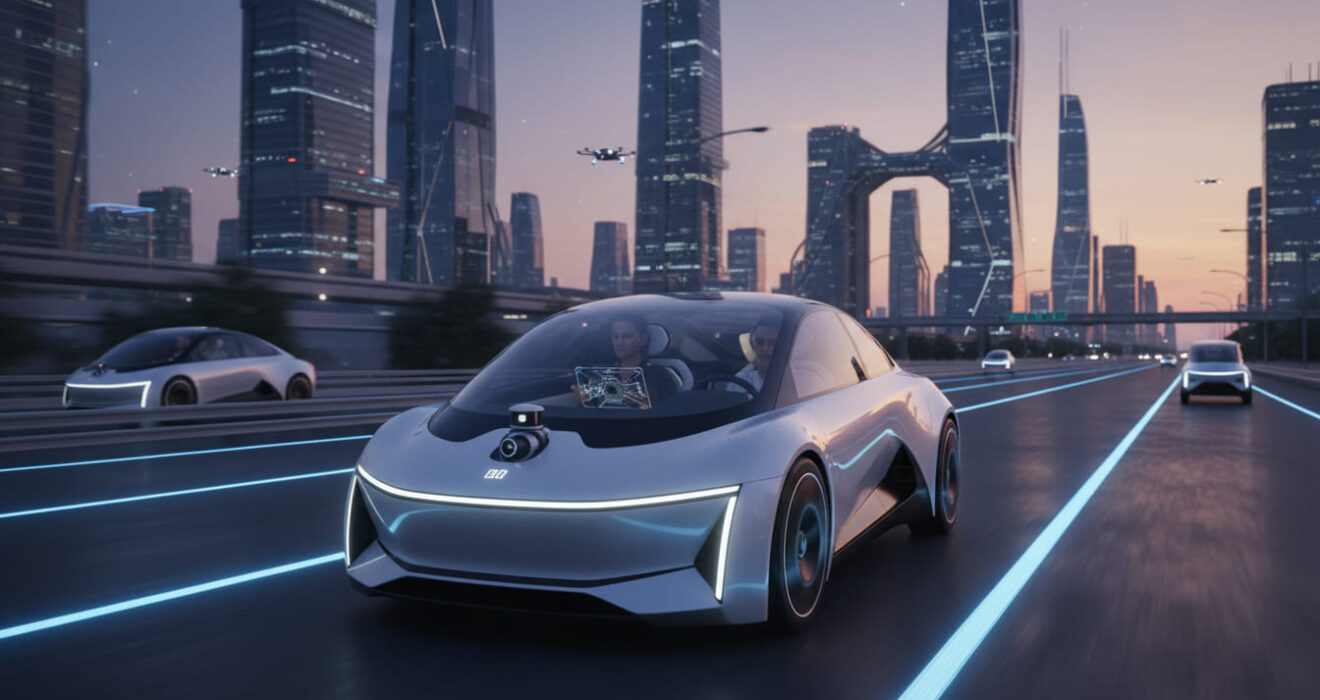
Self Driving Cars 2026 Latest Technology
Self-Driving Cars 2026 Latest Technology
Self-driving cars, also known as autonomous vehicles (AVs), are revolutionizing transportation in 2026. From reducing traffic accidents to improving efficiency and accessibility, self-driving cars 2026 represent the next step in automotive innovation. These vehicles use advanced technologies such as artificial intelligence (AI), machine learning, sensors, and real-time data processing to navigate roads safely without human intervention.
This guide explores the latest technology in self-driving cars 2026, key features, benefits, challenges, real-world applications, and future trends. We also include performance calculations, safety metrics, and FAQs to help readers understand autonomous vehicles comprehensively.
What Are Self-Driving Cars?
A self-driving car is a vehicle capable of sensing its environment and operating without human input. It uses a combination of:
Sensors: LiDAR, radar, cameras, ultrasonic sensors
Artificial Intelligence: Processes data to make driving decisions
GPS and Mapping: Determines precise location and route planning
Connectivity: Communicates with other vehicles (V2V) and infrastructure (V2I)
The goal of self-driving cars 2026 is to make driving safer, more efficient, and accessible while reducing human error.
Levels of Automation in Self-Driving Cars
The Society of Automotive Engineers (SAE) defines six levels of vehicle automation:
| Level | Description | Human Intervention |
|---|---|---|
| 0 | No Automation | Full driver control |
| 1 | Driver Assistance | Steering or acceleration support |
| 2 | Partial Automation | Combined functions, driver supervises |
| 3 | Conditional Automation | Vehicle handles tasks, driver must intervene |
| 4 | High Automation | Vehicle handles most situations, limited intervention |
| 5 | Full Automation | No driver needed under any condition |
Self-driving cars 2026 primarily include Level 3 and Level 4 automation, with some companies testing Level 5 prototypes.
Key Technologies in Self-Driving Cars 2026
1. LiDAR and Radar Systems
LiDAR uses laser pulses to measure distances and create high-resolution 3D maps
Radar detects objects, speed, and movement, even in adverse weather
2. Camera Systems
Multi-directional cameras track lane markings, pedestrians, and traffic signs
Computer vision algorithms analyze real-time video data
3. Artificial Intelligence and Machine Learning
AI algorithms process sensor data and make driving decisions
Machine learning helps vehicles improve over time based on collected driving data
4. Connectivity and Vehicle-to-Everything (V2X)
V2V (Vehicle-to-Vehicle): Avoid collisions, share traffic data
V2I (Vehicle-to-Infrastructure): Communicate with traffic lights, road sensors
V2P (Vehicle-to-Pedestrian): Enhance pedestrian safety
5. High-Definition Maps and GPS
Provides accurate positioning
Enables route optimization and obstacle prediction
6. Advanced Driver Assistance Systems (ADAS)
Lane keeping assist
Adaptive cruise control
Automatic emergency braking
Benefits of Self-Driving Cars 2026
Safety
Reduce human-error accidents
Predict and avoid collisions
Better in adverse conditions (rain, fog, night)
Efficiency
Optimized route planning reduces traffic congestion
Smoother acceleration and braking save fuel or electricity
Accessibility
Provides mobility for the elderly and disabled
Reduces the need for personal car ownership in urban areas
Environmental Impact
Electric autonomous vehicles reduce carbon emissions
Optimized driving reduces fuel consumption
Economic Benefits
Reduces insurance costs due to fewer accidents
Improves delivery, logistics, and ride-hailing efficiency
Self-Driving Car Performance Metrics and Calculations
1. Reaction Time Calculation
Human drivers average 1.5 seconds reaction time. Autonomous vehicles react in milliseconds.
Example:
Human braking distance at 60 mph:
Distance=Speed×Reaction Time=60 mph×1.5 s≈132 ft\text{Distance} = \text{Speed} \times \text{Reaction Time} = 60 \text{ mph} \times 1.5 \text{ s} \approx 132 \text{ ft}
Self-driving car reaction: 0.2 s
Distance=60 mph×0.2 s≈17.6 ft\text{Distance} = 60 \text{ mph} \times 0.2 \text{ s} \approx 17.6 \text{ ft}
Result: Self-driving cars stop ~114 ft sooner, greatly reducing accidents.
2. Fuel/Energy Efficiency Calculation
For electric self-driving cars:
Energy per 100 miles=Battery Capacity (kWh)Range (miles)×100\text{Energy per 100 miles} = \frac{\text{Battery Capacity (kWh)}}{\text{Range (miles)}} \times 100
Example: Tesla Model 3
Battery: 82 kWh, Range: 350 miles
Energy per 100 miles=82350×100≈23.4 kWh per 100 miles\text{Energy per 100 miles} = \frac{82}{350} \times 100 \approx 23.4 \text{ kWh per 100 miles}
Real-World Applications in 2026
Ride-Hailing Services
Companies like Waymo, Cruise, and Tesla RoboTaxi operate fleets of self-driving cars
Delivery and Logistics
Autonomous vans and trucks reduce delivery costs
24/7 operations without driver fatigue
Public Transportation
Autonomous shuttles improve efficiency in urban areas
Reduces congestion and parking requirements
Smart Cities Integration
Traffic light synchronization
Reduced congestion and accidents
Challenges and Concerns
Technical Limitations
Sensor malfunctions in extreme weather
AI misinterpreting unusual road scenarios
Legal and Regulatory Issues
Liability in accidents
Licensing and insurance policies for AVs
Cybersecurity Risks
Vulnerable to hacking and remote control attacks
Public Acceptance
Trust in autonomous technology
Safety perception and adoption rate
SEO Keywords Used Naturally
Balanced keywords in this article include:
self-driving cars 2026
autonomous vehicles
latest self-driving car technology
AI in cars
autonomous car safety
electric self-driving cars
self-driving car features
autonomous vehicle performance
future of transportation
driverless cars 2026
Frequently Asked Questions (FAQs)
1. Are self-driving cars safe in 2026?
Yes, self-driving cars 2026 use AI, sensors, and connectivity to reduce human error and improve safety.
2. How do self-driving cars work?
They combine sensors, cameras, GPS, AI, and connectivity to detect surroundings and make real-time driving decisions.
3. Can I buy a fully autonomous car in 2026?
Some Level 4 vehicles are available commercially, but most cars are Level 3 automation requiring occasional human intervention.
4. How much do self-driving cars cost?
Prices vary widely: EV autonomous sedans start around $40,000, while luxury autonomous vehicles may exceed $120,000.
5. Are self-driving cars better for the environment?
Yes, especially electric AVs reduce emissions, optimize driving efficiency, and support sustainable transportation.
Conclusion
Self-driving cars 2026 represent a major technological leap in transportation. With advanced AI, LiDAR, radar, cameras, and connectivity, autonomous vehicles improve safety, efficiency, accessibility, and sustainability.
Although challenges such as regulatory issues, cybersecurity, and public acceptance remain, the benefits of autonomous vehicles are undeniable. By understanding the latest self-driving car technology, performance metrics, and applications, drivers and businesses can prepare for a safer, smarter, and more efficient future on the road.
The future of mobility is here, and self-driving cars 2026 are at the forefront of transforming how people travel, commute, and transport goods. for further information to read blogs.