
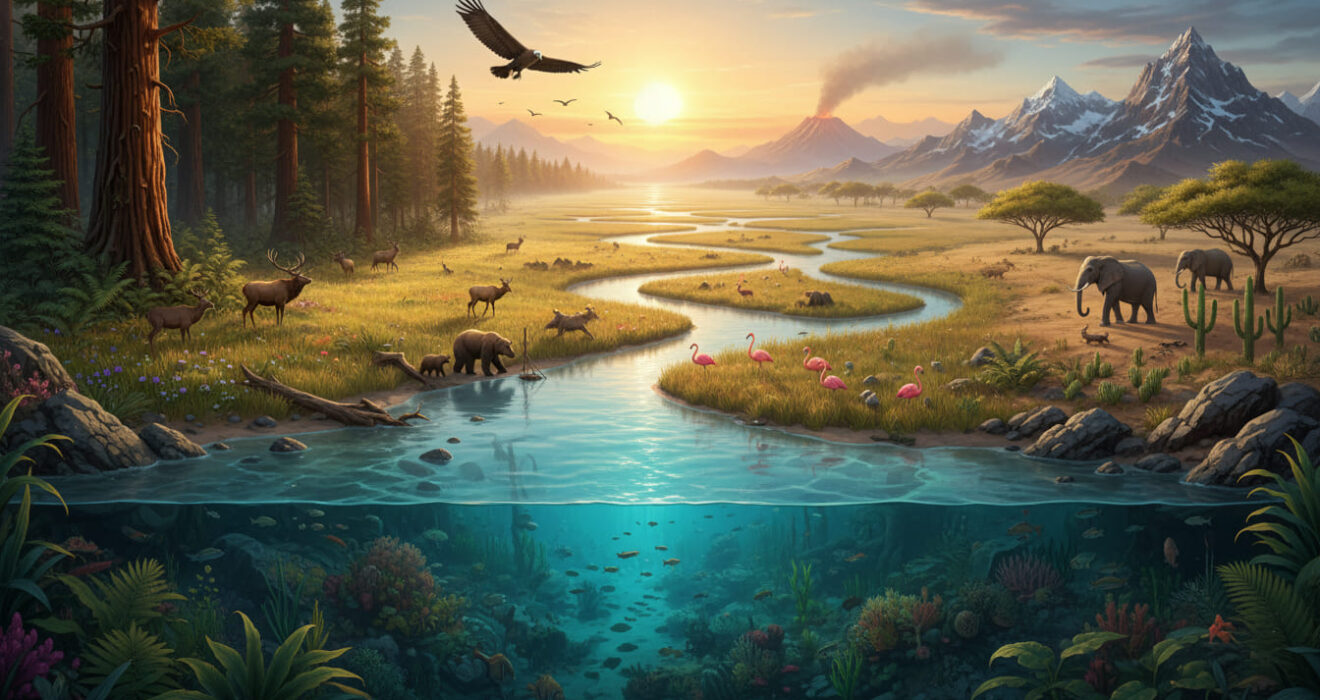
Ecosystems: The Ultimate Guide to Nature’s Balance
Ecosystems: The Ultimate Guide to Nature’s Balance
Ecosystems are the foundation of life on Earth. From dense forests and vast oceans to deserts and grasslands, every ecosystem plays a crucial role in maintaining the balance of nature. Understanding ecosystems is essential for appreciating how living organisms interact with each other and their environment.
In simple terms, an ecosystem is a community of living organisms plants, animals, and microorganisms—interacting with non-living elements like air, water, and soil. Together, these components create a balanced system that supports life.
In today’s rapidly changing world, learning about ecosystems is more important than ever. Climate change, pollution, and deforestation are threatening the delicate balance of ecosystems. This guide will help you understand ecosystems, their types, functions, importance, and how we can protect them.
What Is an Ecosystem?
An ecosystem is a natural system where living and non-living elements interact in a specific environment. These interactions allow energy to flow and nutrients to cycle, making life possible.
Key Components of Ecosystems
- Biotic Components (Living Things)
- Plants
- Animals
- Microorganisms
- Abiotic Components (Non-Living Things)
- Sunlight
- Water
- Air
- Soil
- Temperature
These components work together to form a stable and self-sustaining environment.
Types of Ecosystems
Ecosystems can be broadly divided into two main categories:
1. Terrestrial Ecosystems (Land-Based)
- Forest Ecosystems – Rich in biodiversity and essential for oxygen production
- Desert Ecosystems – Adapted to extreme heat and low water availability
- Grassland Ecosystems – Dominated by grasses and grazing animals
- Mountain Ecosystems – Characterized by varying climates and altitudes
2. Aquatic Ecosystems (Water-Based)
- Freshwater Ecosystems – Rivers, lakes, and ponds
- Marine Ecosystems – Oceans and seas, covering most of Earth’s surface
Each type of ecosystem supports different forms of life and plays a unique role in maintaining environmental balance.
How Ecosystems Work
Ecosystems function through complex interactions between organisms and their environment. The two main processes that keep ecosystems running are:
1. Energy Flow
Energy enters ecosystems through sunlight. Plants convert sunlight into energy through photosynthesis. This energy then moves through the food chain:
- Producers (plants)
- Consumers (animals)
- Decomposers (fungi and bacteria)
2. Nutrient Cycling
Nutrients like carbon, nitrogen, and oxygen circulate within ecosystems. Decomposers break down dead organisms, returning nutrients to the soil and making them available for plants again.
Importance of Ecosystems
Ecosystems are vital for life on Earth. Here’s why they matter:
1. Maintain Balance in Nature
Ecosystems regulate natural processes, ensuring stability in the environment.
2. Support Biodiversity
They provide habitats for millions of species, maintaining biodiversity.
3. Regulate Climate
Forests and oceans absorb carbon dioxide, helping control global temperatures.
4. Provide Natural Resources
Ecosystems supply food, water, medicine, and raw materials.
5. Improve Human Wellbeing
Spending time in nature reduces stress and improves mental health.
Threats to Ecosystems
Despite their importance, ecosystems are under serious threat due to human activities.
Major Threats
- Deforestation – Loss of forests destroys habitats
- Pollution – Contaminates air, water, and soil
- Climate Change – Alters temperature and weather patterns
- Overexploitation – Excessive use of natural resources
- Urbanization – Expands cities at the cost of natural land
These threats disrupt the balance of ecosystems and can lead to irreversible damage.
How to Protect Ecosystems
Protecting ecosystems is essential for a sustainable future. Here are practical steps:
1. Adopt Sustainable Living
Use resources wisely and reduce waste.
2. Reduce, Reuse, Recycle
Minimize pollution by managing waste responsibly.
3. Plant Trees
Reforestation helps restore damaged ecosystems.
4. Avoid Pollution
Reduce plastic use and prevent environmental contamination.
5. Support Conservation Efforts
Participate in or support environmental protection programs.
Ecosystems and Biodiversity
Biodiversity refers to the variety of life within an ecosystem. Healthy ecosystems depend on high biodiversity because:
- It increases resilience to environmental changes
- It ensures stability in food chains
- It supports ecosystem productivity
When biodiversity decreases, ecosystems become fragile and less capable of supporting life.
The Role of Humans in Ecosystems
Humans are an integral part of ecosystems. Our actions can either support or harm environmental balance.
Positive Impacts
- Conservation programs
- Sustainable agriculture
- Wildlife protection
Negative Impacts
- Pollution
- Deforestation
- Climate change
Understanding our role helps us make better decisions for the environment.
Ecosystems and Climate Change
Climate change is one of the biggest threats to ecosystems. Rising temperatures, melting ice, and extreme weather events are affecting natural systems worldwide.
Effects on Ecosystems
- Loss of habitats
- Species extinction
- Changes in migration patterns
- Ocean acidification
Protecting ecosystems is crucial for combating climate change and ensuring a stable future.
Future of Ecosystems
The future of ecosystems depends on our actions today. By promoting sustainability and environmental awareness, we can protect nature for future generations.
Governments, organizations, and individuals must work together to restore and preserve ecosystems.
FAQs About Ecosystems
1. What is a simple definition of an ecosystem?
An ecosystem is a community of living organisms interacting with their physical environment.
2. Why are ecosystems important?
Ecosystems maintain balance, support biodiversity, and provide essential resources for life.
3. What are the main types of ecosystems?
The main types are terrestrial (land-based) and aquatic (water-based).
4. How do ecosystems maintain balance?
Through energy flow and nutrient cycling.
5. What are the biggest threats to ecosystems?
Deforestation, pollution, climate change, and overexploitation.
6. How can we protect ecosystems?
By adopting sustainable practices, reducing waste, and supporting conservation efforts.
Conclusion
Ecosystems are the backbone of life on Earth. They connect living organisms with their environment, creating a balanced and sustainable system. From providing essential resources to regulating climate and supporting biodiversity, ecosystems play a critical role in our survival.
However, human activities are putting immense pressure on these natural systems. Protecting ecosystems is not just an environmental responsibility it is essential for our future. for further information to read blogs.