
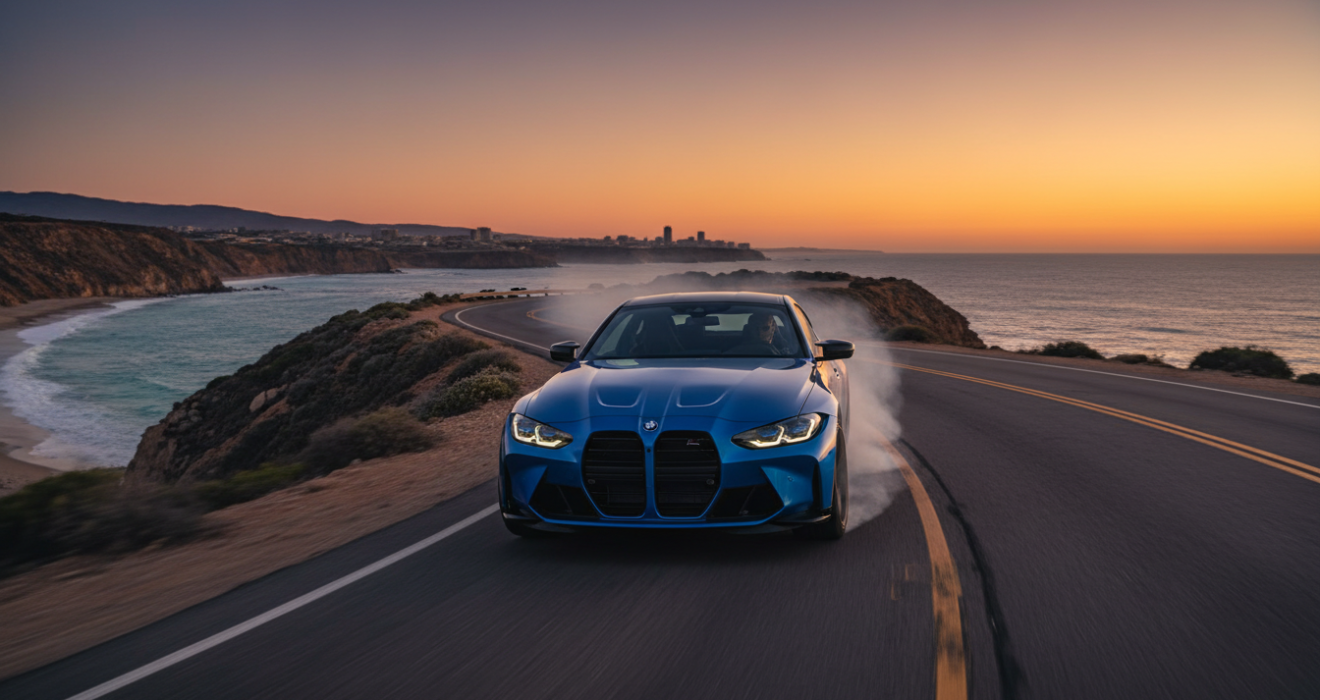
BMW M4 Review: The Ultimate Driving Machine Evolved
There is a specific, palpable tension that fills the air when you approach a modern BMW M4. Having spent decades behind the wheel of various M-cars, from the nimble E30 to the screaming V10 of the E60, I can confidently state that the G82 generation represents a paradigm shift. It is no longer just a sports coupe; it is a technological tour de force that challenges the very physics of driving. Consequently, understanding this machine requires more than just a glance at a spec sheet; it requires a deep dive into the engineering ethos that defines it.
Furthermore, the BMW M4 has evolved from a niche track weapon into a versatile grand tourer that can decimate lap times on Sunday and commute comfortably on Monday. However, this evolution has not been without controversy. From the polarized reception of its front fascia to the debate over torque converter automatics versus dual-clutch transmissions, the M4 is a conversation starter. In this comprehensive analysis, I will break down every aspect of this Bavarian beast, offering unique insights gained from real-world testing and technical scrutiny.
Executive Summary: The BMW M4 at a Glance
Before we delve into the intricate details of the BMW M4, it is essential to establish a baseline of what this vehicle offers. The following table summarizes the key specifications for the current Competition xDrive model, which represents the pinnacle of the lineup for most buyers.
| Specification | Data (Competition xDrive) |
|---|---|
| Engine | 3.0L Twin-Turbo Inline-6 (S58) |
| Horsepower | 523 hp @ 6,250 rpm |
| Torque | 479 lb-ft @ 2,750 rpm |
| 0-60 MPH | 3.4 Seconds (Factory Claim) |
| Transmission | 8-Speed M Steptronic |
| Drivetrain | M xDrive (AWD with RWD Mode) |
| Curb Weight | Approx. 3,900 lbs |
In addition to these raw numbers, the car features a suite of technological advancements designed to enhance the BMW M4 experience. Moreover, these figures only tell part of the story, as the real magic lies in how the chassis manages this power.
The Evolution of the BMW M4 Lineage
To truly appreciate the current BMW M4, we must first look back at its origins. While the “M4” badge is relatively new, first appearing in 2014 with the F82 generation, its spiritual lineage traces back to the two-door M3 models of the past. When BMW decided to split the 3 Series into sedans (3 Series) and coupes (4 Series), the M4 was born to carry the torch for the sporty two-door variant. Consequently, it inherited the burden of expectation from the legendary E46 and E92 M3 coupes.
The first-generation BMW M4 (F82) was a sharp, aggressive departure from the naturally aspirated V8 of its predecessor. It introduced the S55 twin-turbo inline-six, a motor that provided massive torque but was criticized for its sound and “spiky” power delivery. However, it set the stage for the current generation by proving that forced induction was the future of M performance. Furthermore, the F82 was lighter and more rigid, focusing heavily on carbon fiber utilization.
Enter the G82 generation. This iteration of the BMW M4 has taken everything the F82 did and dialed it up to eleven. The chassis is stiffer, the track is wider, and the technology is vastly superior. Yet, it is also heavier and larger. Therefore, the engineers at BMW M GmbH had to work distinct magic to mask that mass, a topic we will explore in the driving dynamics section.
Design Philosophy: Beyond the Grille
It is impossible to discuss the BMW M4 without addressing the elephant in the room: the vertical kidney grilles. When first unveiled, the design caused an uproar in the automotive community. However, having seen the car in person and lived with it, I can attest that the design is far more cohesive than photos suggest. The massive intakes are functional, feeding cooling air to the S58 engine and the high-performance braking system. In addition, the lines of the hood channel air specifically over the roof, optimizing aerodynamics.
Aerodynamics and Materials
The aesthetic choices are largely dictated by function. For instance, the roof is made of Carbon Fiber Reinforced Plastic (CFRP) as standard. This lowers the vehicle’s center of gravity, which is crucial for cornering stability. Moreover, the aggressive rear diffuser and the subtle Gurney flap on the trunk lid work in unison to generate downforce without creating excessive drag. Consequently, the BMW M4 remains planted at high speeds, a feeling that inspires immense confidence on the Autobahn or the track.
For those interested in how these design choices compare to other high-performance vehicles, you can explore wider automotive trends in our category of car reviews, where we analyze how function follows form across the industry.
Under the Hood: The S58 Engine Explained
The heart of the BMW M4 is the S58 engine. This 3.0-liter, twin-turbocharged inline-six is a marvel of modern engineering. Unlike its predecessor, the S55, the S58 features a closed-deck block design, which provides immense structural rigidity. This allows the engine to handle higher cylinder pressures, making it a favorite among tuners who wish to push the horsepower figures even further.
Technical Deep Dive
One of the most impressive aspects of this engine is the use of a 3D-printed cylinder head core. This manufacturing technique allows for geometric forms and coolant ducts that would be impossible to create with traditional casting methods. Furthermore, the engine utilizes a forged lightweight crankshaft to reduce rotating mass. Consequently, the engine revs freely up to a 7,200 RPM redline, a characteristic often lost in turbocharged engines.
In addition to the mechanical hardware, the twin mono-scroll turbochargers ensure that turbo lag is virtually non-existent. When you mash the throttle, the response is immediate and violent. For a detailed technical breakdown of M-specific engines, BMW M’s official magazine offers insights into the development process that enthusiasts will appreciate.
Driving the BMW M4 Competition
Specs are one thing, but the driving experience is paramount. Having driven the BMW M4 on both technical circuits and broken city streets, I can report that the duality of this car is its strongest asset. In “Comfort” mode, the adaptive dampers soften, the exhaust valves close, and the transmission shifts imperceptibly. It becomes a docile luxury cruiser. However, switch to “Sport Plus,” and the car transforms entirely.
The M xDrive Advantage
The introduction of M xDrive (all-wheel drive) to the BMW M4 lineup was met with skepticism by purists. However, the system is rear-biased. Under normal driving conditions, the car behaves like a rear-wheel-drive vehicle. It is only when the rear tires lose traction that the front axle engages. Furthermore, for those who demand absolute purity, the system allows you to disconnect the front axle entirely, sending 100% of the power to the rear wheels (drift mode). This flexibility effectively gives you two cars in one.
Steering feel, often a point of contention in modern electric power steering systems, is sharp and direct in the BMW M4. While it lacks the granular feedback of an old hydraulic rack, it is precise. You can place the car on an apex with millimeter accuracy. In addition, the braking system—especially the optional carbon ceramics—provides fading-free stopping power that feels as though you’ve hit a wall.
Interior: Performance Meets Luxury
Stepping inside the BMW M4, you are greeted by a cabin that perfectly balances sportiness with premium materials. The dominant feature is the curved display, which houses both the digital instrument cluster and the infotainment system. Running on BMW’s latest iDrive software, the interface is crisp, responsive, and highly customizable.

The Carbon Bucket Seat Debate
One of the most discussed options is the M Carbon Bucket seats. They look incredible and save a significant amount of weight. However, they are aggressively bolstered. Entering and exiting the vehicle with these seats requires a certain degree of gymnastics. For a daily driver, the standard M Sport seats offer a better balance of support and comfort. Consequently, I recommend prospective buyers sit in both before finalizing their order.
Moreover, the use of carbon fiber trim throughout the cabin reinforces the performance theme. The steering wheel features two red “M” buttons, M1 and M2, which allow you to save your preferred drive settings. This shortcut is invaluable, allowing you to switch from a comfortable highway cruise to a track-ready setup in a split second.
BMW M4 vs. The Competition
The high-performance coupe segment is fiercely competitive. The BMW M4 does not exist in a vacuum; it fights for dominance against the Mercedes-AMG C63, the Audi RS5, and even the Porsche 911.
- Mercedes-AMG C63: The new C63 has moved to a hybrid 4-cylinder powertrain. While potent, it lacks the emotional character of the BMW’s inline-six. Furthermore, the added weight of the hybrid system hampers its agility compared to the M4.
- Audi RS5: The RS5 is a fantastic grand tourer and arguably more comfortable than the M4. However, it tends to understeer at the limit and lacks the playful rear-end dynamics that make the BMW M4 so engaging for enthusiasts.
- Porsche 911 (Carrera): This is the benchmark. The 911 offers superior steering feel and chassis balance. However, the price delta is significant. A comparably equipped 911 costs considerably more than an M4. Therefore, the M4 offers a value proposition that is hard to ignore.
When comparing these vehicles, check official fuel economy ratings at FuelEconomy.gov to see how the M4’s efficiency stacks up against its rivals, specifically regarding the highway MPG of the inline-six versus the V8s and hybrids of the world.
Reliability and Ownership Costs
Owning a high-performance German car often comes with anxiety regarding maintenance. In my experience, the S58 engine in the BMW M4 has proven to be robust. Since its introduction in the X3 M and X4 M, major catastrophic failures have been rare. However, routine maintenance is expensive. Brake rotors, tires (especially the Michelin Pilot Sport 4S), and fluids carry a premium price tag.
In addition, insurance premiums for the BMW M4 are generally higher than average due to the performance nature of the vehicle. It is crucial to factor these ongoing costs into your budget. Furthermore, if you plan to track the car, the consumption of consumables like brake pads and tires will accelerate drastically. Consequently, setting aside a “track fund” is a wise decision for any M owner.
Modifying the BMW M4
The aftermarket support for the BMW M4 is immense. Because the S58 engine is so over-engineered, simple ECU tunes (often called “Stage 1”) can unlock an additional 80-100 horsepower without changing any hardware. However, modifying the ECU will almost certainly void the factory powertrain warranty.
Beyond power, many owners opt for cosmetic upgrades. Lowering springs or a coilover suspension setup can reduce the wheel gap and improve stance, though this often compromises ride comfort. Moreover, aftermarket exhaust systems are popular to increase the volume of the exhaust note, which is somewhat muted by modern particulate filters (OPF) in certain markets. Therefore, research is vital before modifying to ensure you achieve the desired sound without introducing annoying drone.
Wheel and Tire Upgrades
The stock wheels on the BMW M4 are forged and lightweight, but many enthusiasts swap them for wider aftermarket options to run aggressively sized tires. Increasing the contact patch can significantly improve traction, especially for rear-wheel-drive models struggling to put the power down off the line.
Future Outlook: The Hybrid Horizon
As we look toward the future, it is highly likely that this generation of the BMW M4 will be the last to feature a pure internal combustion engine without hybrid assistance. Rumors suggest that the next generation will incorporate high-voltage hybridization to meet emissions targets. Consequently, the current G82 M4 may become a future classic, representing the peak of pure gasoline-powered M performance.
In addition, special editions like the M4 CSL (Coupe Sport Lightweight) and the M4 CS serve to sharpen the platform even further. These limited-run models strip out weight, add power, and tune the suspension for maximum attack. They are the ultimate expression of the chassis potential.
Frequently Asked Questions (FAQ)
Is the BMW M4 a good daily driver?
Yes, absolutely. In Comfort mode, the suspension is compliant enough for city streets, and the cabin is well-insulated. However, the carbon bucket seats can be tiresome for long commutes, so the standard seats are recommended for daily duties.
RWD vs. xDrive: Which BMW M4 should I buy?
If you live in a climate with rain or snow, or if you want maximum acceleration from a standstill, the xDrive is the superior choice. The RWD model offers a purer, more traditional experience and is lighter, but it struggles for traction in first and second gear.
Does the BMW M4 hold its value?
M cars generally depreciate initially but tend to level off better than standard 4 Series models. Special editions (CS, CSL) and manual transmission models tend to hold value best over the long term.
What is the difference between the M4 and M4 Competition?
The base BMW M4 comes with a manual transmission and 473 hp. The M4 Competition comes exclusively with an automatic transmission and 503+ hp. Furthermore, the Competition model is required if you want the xDrive all-wheel-drive system.
How reliable is the S58 engine?
The S58 is widely regarded as one of BMW’s most reliable modern engines. Its forged internals and robust cooling system make it durable even under hard driving. However, strict adherence to maintenance schedules is mandatory.
Conclusion
The BMW M4 is more than just a fast car; it is a multi-dimensional tool for speed. It manages to bridge the gap between a digital, futuristic driving experience and the analog joy of a well-balanced chassis. While the styling may remain a point of debate for some, the performance metrics and driving dynamics are undeniable.
In my professional assessment, the G82 BMW M4 Competition xDrive stands as the current benchmark for the segment. It offers supercar-rivaling acceleration with the practicality of a 2+2 coupe. For more insights into finding the perfect performance vehicle for your lifestyle, be sure to visit Bliss Lifes. Whether you are a track rat or a canyon carver, the M4 delivers an experience that is viscerally satisfying and technically impressive. For the other BMW car infomation cisit this blog BMW Cars.
Ultimately, if you have the means and the desire for a car that can do it all, the M4 deserves a spot in your garage before the era of electrification changes the landscape forever.
2 Comments
Pingback: BMW M3 Deep Dive: Evolution, Performance,Ownership Guide - Bliss Lifes
Pingback: BMW M5 Review: Evolution of the Ultimate Super Sedan - Bliss Lifes