
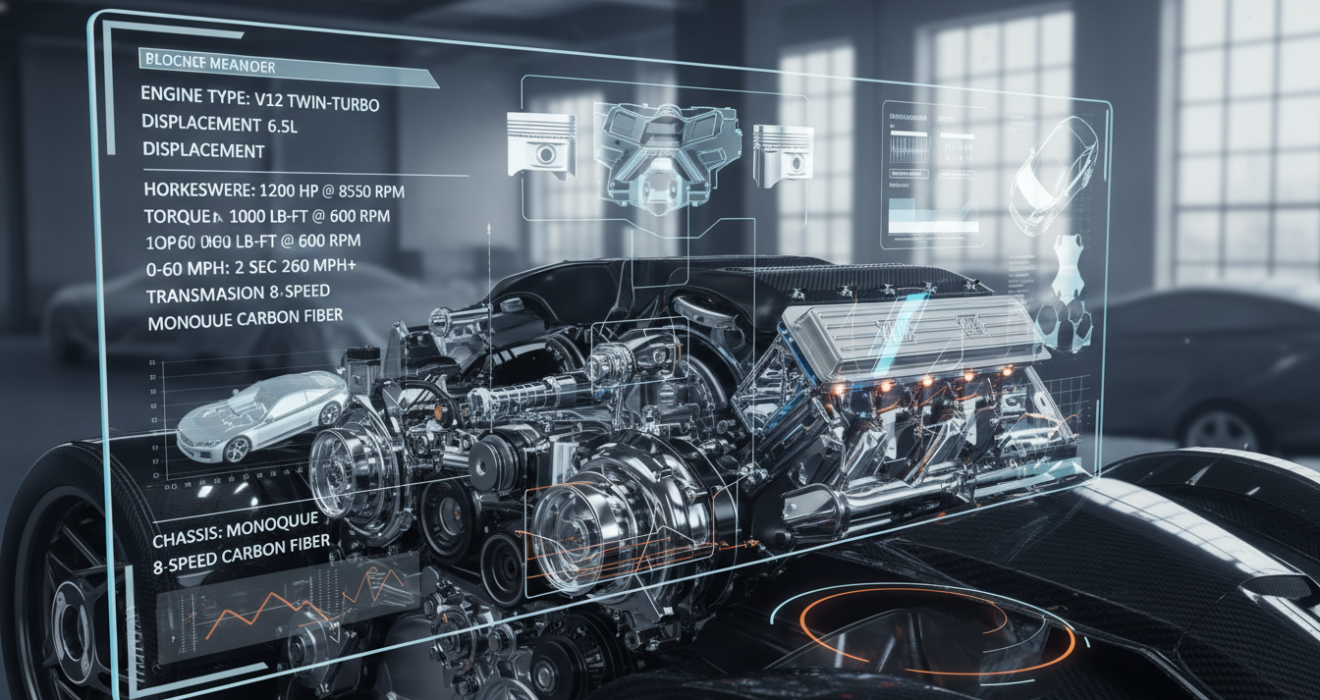
Car Specification Details: An Expert Guide to Vehicle Data
Mastering Car Specification Details: A Comprehensive Guide for Buyers
I still remember the first time I walked into a dealership, completely overwhelmed by the glossy brochures and the salesman’s rapid-fire jargon. He spoke about torque curves and gear ratios as if they were common table talk. At that moment, I realized that understanding car specification details is not just about being a car enthusiast; it is about protecting your investment. Consequently, buying a vehicle is often the second largest purchase an individual makes, yet many rush through the technical data sheet without truly comprehending what the numbers imply for their daily driving experience.
In this extensive guide, I will deconstruct the confusing world of automotive specs. Furthermore, I will share insights from my years of analyzing vehicle data to help you distinguish between marketing fluff and engineering reality. Whether you are comparing family SUVs or high-performance coupes, knowing how to interpret these metrics is essential. Therefore, we will dive deep into engines, dimensions, safety ratings, and the hidden numbers manufacturers rarely advertise.
Executive Summary: Key Car Specs at a Glance
Before we delve into the minutiae, here is a quick reference table summarizing the critical areas of car specification details you must prioritize based on your needs.
| Specification Category | Key Metric | Why It Matters |
|---|---|---|
| Performance | Torque & Horsepower | Determines acceleration speed and towing capability. |
| Efficiency | MPG / MPGe | Impacts long-term ownership costs and refueling frequency. |
| Dimensions | Wheelbase | Affects interior space and ride smoothness. |
| Safety | NHTSA/IIHS Ratings | Crucial for passenger protection during collisions. |
| Handling | Turning Circle | dictates how easily you can maneuver in tight spaces. |
Breaking Down Engine Car Specification Details
The heart of any vehicle is its powertrain, and this is typically where the most confusion arises. When examining car specification details regarding the engine, you are primarily looking at how the vehicle converts fuel (or electricity) into motion. However, two numbers often steal the spotlight: horsepower and torque.
Horsepower vs. Torque: The Real Story
Horsepower sells cars, but torque moves them. This old adage remains relevant today. Horsepower measures the engine’s ability to keep working at high speeds, which translates to top speed and sustained highway cruising. Conversely, torque measures the rotational force available to turn the wheels. If you need to accelerate quickly from a stoplight or tow a heavy trailer, you should prioritize torque figures.
Moreover, the peak RPM (revolutions per minute) at which these figures are achieved is equally important. An engine that produces peak torque at 1,500 RPM will feel much more responsive in city driving than one that requires 5,000 RPM to wake up. Consequently, modern turbocharged engines are popular because they offer peak torque across a wide RPM band.
Displacement and Configuration
Engine displacement, usually measured in liters (e.g., 2.0L) or cubic inches, refers to the total volume of air and fuel the engine’s cylinders can hold. Generally, larger displacement equals more power, but lower efficiency. However, forced induction methods like turbocharging have disrupted this rule. A 2.0L turbocharged engine can now outperform a classic 5.0L V8 in specific metrics. Additionally, the configuration (Inline-4, V6, Flat-6) affects the vehicle’s center of gravity and smoothness. According to standards set by SAE International, the methodology for testing these outputs is rigorous, ensuring that the numbers you see on a spec sheet are comparable across brands.
Analyzing Dimensions in Car Specification Details
While performance gets the glory, physical dimensions dictate the daily usability of the machine. When reviewing car specification details, you must look beyond the basic length and width.
Wheelbase and Ride Quality
The wheelbase is the distance between the center of the front wheels and the center of the rear wheels. This is a critical specification for two reasons. First, a longer wheelbase generally provides a smoother ride because there is more time between the front and rear wheels hitting road imperfections. Second, it usually correlates directly with interior legroom. Therefore, if passenger comfort is your goal, prioritize a longer wheelbase.
Track Width and Handling
Track width refers to the distance between the left and right wheels on the same axle. A wider track usually improves stability during cornering by reducing body roll. Furthermore, it contributes to the aggressive “stance” of a vehicle. However, a vehicle that is too wide can be a nightmare to park in urban environments.
Cargo Volume: SAE vs. VDA
Cargo space is often listed in cubic feet or liters. However, be wary of how this is measured. The SAE standard typically measures to the roof, while European VDA standards might measure to the window line. Consequently, two cars with identical cargo specs might have vastly different usable shapes. Always test the space with real-world items like a stroller or golf clubs.
Understanding Transmission and Drivetrain Specs
The transmission translates engine power to the wheels. Understanding the nuances here is vital for assessing driving dynamics.
- Manual Transmission: Offers driver engagement but is becoming rare.
- Automatic (Torque Converter): Smooth and reliable, perfect for luxury and cruising.
- CVT (Continuously Variable Transmission): Prioritizes fuel economy by keeping the engine at optimal RPM, though some drivers dislike the “drone” noise.
- DCT (Dual-Clutch Transmission): Offers lightning-fast shifts for performance cars but can be jerky at low speeds.
In addition to the transmission type, the final drive ratio is a hidden spec that matters. A “shorter” (higher number) ratio improves acceleration but increases engine noise and fuel consumption on the highway. Conversely, a “taller” ratio improves MPG but makes the car feel sluggish off the line.
Decoding Safety and Structural Data
Safety specifications have evolved from simple seatbelt counts to complex algorithmic data. When analyzing modern car specification details regarding safety, look for specific terminology.
Active vs. Passive Safety
Passive safety features are structural elements like crumple zones, airbags, and high-strength steel cages designed to protect you during a crash. Active safety refers to technology designed to prevent the crash entirely, such as Automatic Emergency Braking (AEB) and Lane Keep Assist (LKA). According to the National Highway Traffic Safety Administration (NHTSA), the presence of these active technologies is significantly reducing rear-end collisions nationwide.
Curb Weight vs. Gross Vehicle Weight Rating (GVWR)
These two numbers are often confused. Curb weight is the weight of the vehicle with all standard equipment and fluids, but no passengers or cargo. GVWR is the maximum safe weight of the vehicle including passengers, cargo, and tongue weight from a trailer. Therefore, the difference between GVWR and Curb Weight is your actual payload capacity. Overloading a vehicle compromises braking distance and suspension integrity.
The Impact of Fuel Economy Specs
With rising energy costs, efficiency is paramount. Manufacturers provide estimates for City, Highway, and Combined driving. For electric vehicles, this is measured in MPGe (Miles Per Gallon equivalent).
It is crucial to note that these are laboratory estimates. Real-world results vary based on driving style, tire pressure, and weather. Furthermore, the drag coefficient (Cd) is a specification that heavily influences highway fuel economy. A lower number (e.g., 0.24 Cd) means the car slices through the air with less resistance. For unbiased data, many buyers cross-reference manufacturer claims with data verified by the U.S. Department of Energy.
If you are looking for specific model breakdowns and how these fuel economy numbers translate to real-world costs, I highly recommend checking out the extensive guides at Bliss Lifes Automotive Category for in-depth reviews and comparisons.
Hidden Car Specification Details You Should Know
Beyond the brochure highlights, there are several “hidden” specs that veteran car buyers look for. These often reveal the engineering quality of the vehicle.
Torsional Rigidity
This measures how much the car’s frame twists under stress. A higher number (measured in Nm/degree) means a stiffer chassis. Consequently, a stiffer chassis allows the suspension to do its job more effectively, resulting in better handling and fewer squeaks and rattles over time.
Unsprung Mass
This refers to the weight of components not supported by the suspension, such as wheels, tires, and brakes. Lower unsprung mass allows the wheels to react faster to bumps, improving grip and ride comfort. This is why performance cars often feature lightweight forged alloy wheels and carbon-ceramic brakes.
Turning Circle
Often overlooked until you are stuck in a tight parking garage, the turning circle (or turning radius) dictates maneuverability. A difference of just two feet can determine whether you can pull a U-turn in one go or if you have to perform a three-point turn. City dwellers should prioritize this metric heavily.
How to Use Car Specification Details for Comparison
Gathering data is only the first step; analyzing it is where the value lies. When you have narrowed your choices down to two or three models, create a spreadsheet comparing these specific data points side-by-side.
Do not just compare the base numbers. Look at the power-to-weight ratio (Horsepower divided by Curb Weight). A car with less horsepower might actually be faster and more agile if it is significantly lighter. Furthermore, compare the warranty specifications. A longer powertrain warranty often indicates the manufacturer’s confidence in their engineering tolerances.
Frequently Asked Questions
What is the most important spec for a family car?
For a family vehicle, the wheelbase and safety ratings are paramount. A longer wheelbase ensures a smoother ride and more rear legroom for car seats, while high NHTSA ratings ensure passenger protection.
Does higher octane fuel improve engine specs?
Only if the car specification details explicitly state that “premium fuel is required.” If the manual recommends regular unleaded, using premium will not boost horsepower or torque significantly; it is essentially wasted money.
Why do European and American cars list specs differently?
Different regions use different testing cycles and measurement standards (e.g., SAE vs. DIN for horsepower, EPA vs. WLTP for range). Always ensure you are converting units correctly when comparing international models.
Is torque more important than horsepower?
For daily driving, towing, and carrying heavy loads, torque is generally more important as it provides the “shove” to get moving. Horsepower is more relevant for high-speed performance and racing applications.
Conclusion
Understanding car specification details provides you with a superpower in the automotive market. It allows you to look past the shiny paint and the charismatic salesperson to see the vehicle for what it truly is: a collection of engineering compromises and capabilities. By analyzing the engine metrics, dimensions, safety data, and hidden structural specs, you can ensure that the vehicle you choose fits your lifestyle perfectly.
Remember, the numbers tell a story. Whether it is the efficiency of the drag coefficient or the utility of the GVWR, every digit on that spec sheet impacts your experience behind the wheel. Take the time to read them, understand them, and drive away with confidence.