
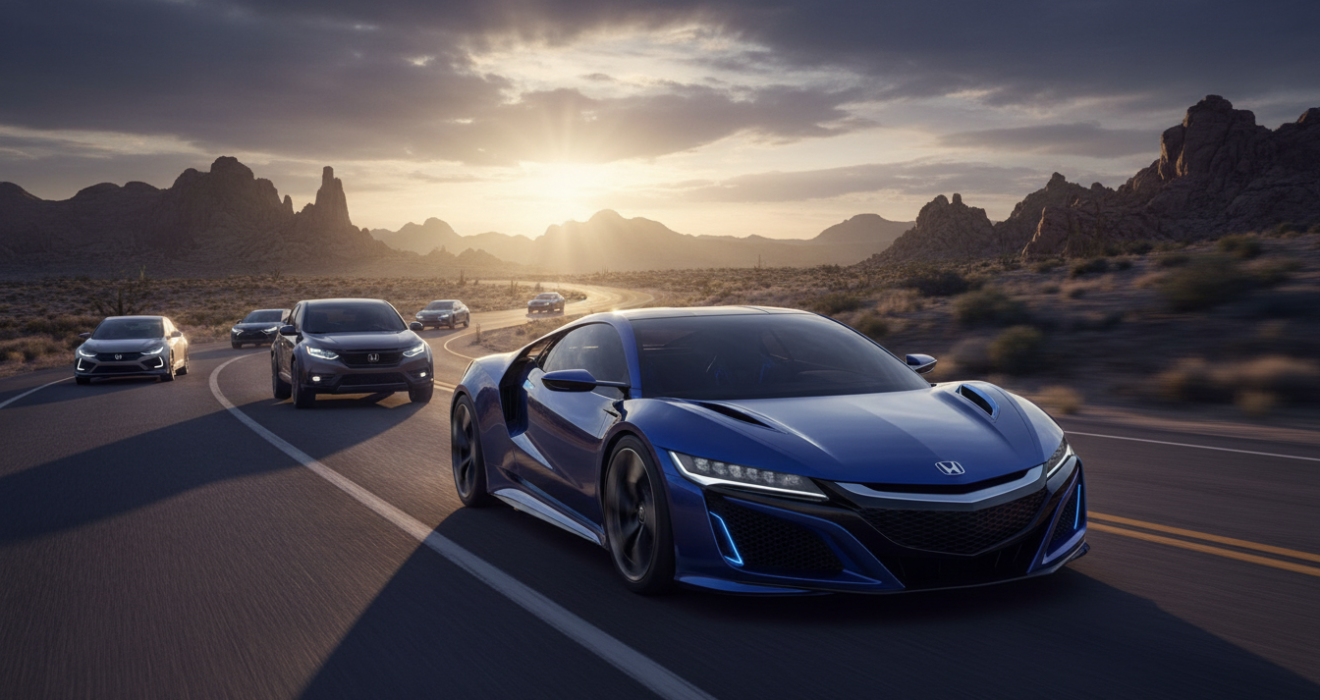
Honda Cars Deep Dive: 2026 Guide to Performance & Reliability
In my two decades of covering the automotive industry, few manufacturers have sparked as much debate and admiration as Honda. Whether it is the frantic redline of an S2000 or the quiet dependability of a family Odyssey, Honda cars represent a unique intersection of engineering passion and pragmatic utility. I remember my first experience behind the wheel of a 1990s Civic; the lightweight chassis and the tactile feedback from the steering wheel were revelations. Today, as we navigate a market saturated with options, understanding exactly what this Japanese automaker offers is more critical than ever.
Executive Summary: Key Takeaways
| Category | Key Highlights | Top Models |
|---|---|---|
| Compact & Sedans | Renowned for fuel efficiency, engaging handling, and class-leading resale value. | Civic, Accord, Integra (Acura sibling) |
| SUVs & Crossovers | Focus on family safety (Honda Sensing), interior versatility, and hybrid options. | CR-V, Pilot, HR-V, Passport |
| Performance | High-revving engines, manual transmissions, and track-ready chassis tuning. | Civic Type R, Civic Si |
| Reliability | Consistently ranked in the top tier for longevity and low maintenance costs. | Entire Lineup |
Furthermore, the automotive landscape is shifting rapidly toward electrification and autonomy. Consequently, buyers are not just looking for a car that starts every morning; they are seeking a vehicle that future-proofs their investment. In this comprehensive guide, I will take you through the nuances of the current lineup, the reality of long-term ownership, and how Honda vehicles stack up against fierce competition. Moreover, we will explore the technological advancements that keep this brand relevant in the modern era.
The Enduring Legacy of Honda Cars
To truly appreciate the current lineup, one must first understand the engineering philosophy that drives the company. Unlike many competitors who started as textile loom manufacturers or heavy industry giants, Honda’s roots are deeply planted in the soil of internal combustion mastery. Soichiro Honda was a racer at heart. Therefore, even the most pedestrian Honda cars often contain a spark of performance DNA. This “Man Maximum, Machine Minimum” philosophy dictates that the mechanical components should take up as little space as possible, leaving maximum room for passengers.
Additionally, this engineering-first mindset has led to significant innovations. For example, the CVCC engine in the 1970s proved that cars could meet strict emissions standards without catalytic converters. fast forward to today, and that same spirit of innovation is evident in their two-motor hybrid systems. However, it is not just about engines; it is about how the car feels. In my experience testing hundreds of vehicles, Honda cars consistently offer a level of driver engagement that is absent in many rivals like Toyota or Nissan.
Defining the “Honda Feel”
What exactly does it feel like to drive a Honda? First and foremost, there is a lightness to the controls. The steering usually offers precise feedback, allowing you to know exactly what the front tires are doing. Furthermore, the suspension tuning strikes a delicate balance. It is compliant enough to absorb urban potholes, yet stiff enough to minimize body roll in corners. Consequently, even a base model Civic feels more “alive” than a comparable Corolla.
For those interested in exploring a broader range of vehicle reviews and comparisons to see how these traits stack up against the wider market, I highly recommend visiting BlissLifes’ category on cars, where we dive deep into various automotive segments.
Analyzing the Current Sedan Lineup
While the world has gone mad for SUVs, Honda remains committed to the sedan format. This dedication is evident in the continuous refinement of their core passenger cars. Honda cars in the sedan segment are not merely surviving; they are thriving by offering superior driving dynamics and fuel economy.
The Iconic Honda Civic
The Civic is the bread and butter of the brand. Having evolved through eleven generations, the current iteration is arguably the most mature. In my recent test drive of the latest Civic Touring, I was struck by the interior quality. The honeycomb mesh spanning the dashboard is a masterstroke of design—hiding the air vents while providing a premium aesthetic. Moreover, the 1.5-liter turbocharged engine provides ample power for highway merging while maintaining excellent efficiency.
However, the Civic is not just about commuting. The Civic Si and the legendary Type R represent the pinnacle of front-wheel-drive performance. The Type R, in particular, defies physics. It corners with such ferocity that you forget it sends over 300 horsepower to the front wheels alone. For enthusiasts, these Honda cars are the gold standard.
The Honda Accord’s Dominance
Moving up the size chart, the Accord continues to set the benchmark for midsize sedans. Historically, the Accord has always been the “driver’s choice” in this segment. The latest generation leans heavily into hybridization. Consequently, the powertrain is smoother and more responsive than ever before. The transition between electric and gas power is seamless, a testament to Honda’s engineering prowess.
In addition to performance, the interior space is cavernous. Rear-seat legroom in the Accord rivals full-size luxury sedans. Therefore, for families who resist the urge to buy an SUV, the Accord remains a brilliant, logical choice.
Exploring Honda SUVs and Trucks
The shift in consumer preference has forced every manufacturer to expand their utility offerings. Honda is no exception. Their lineup of SUVs and trucks is designed to capture the same reliability and engagement found in their sedans, but with added versatility.
The Ubiquitous Honda CR-V
If you stand on a street corner for five minutes, you are guaranteed to see a Honda CR-V. It is one of the best-selling vehicles globally for a reason. During a week-long road trip with the CR-V Hybrid, I appreciated the practical touches. The doors open nearly 90 degrees, making it incredibly easy to load car seats or bulky gear. Furthermore, the cargo floor is low and wide.
From a mechanical standpoint, the CR-V benefits from the same chassis architecture as the Civic. As a result, it handles better than a vehicle of its height has any right to. It is predictable, safe, and incredibly easy to live with. For detailed safety ratings on the CR-V and other models, the NHTSA safety ratings provide invaluable data that every buyer should consult.
Passport and Pilot Capabilities
For those needing more space, the Pilot and Passport enter the chat. The Pilot is the three-row family hauler, effectively a minivan for people who refuse to drive minivans. The new generation Pilot has adopted a more rugged, boxy aesthetic to appeal to the adventure crowd. Under the hood, the 3.5-liter V6 remains a gem. It is smooth, powerful, and sounds surprisingly good when pushed.
Conversely, the Passport is the two-row version of the Pilot. It is shorter, lighter, and tuned for slightly more aggressive off-road use, especially in the TrailSport trim. While Honda cars are not typically associated with rock crawling, the Passport TrailSport can handle fire roads and moderate trails with confidence.
The Ridgeline Anomaly
We cannot discuss this brand without mentioning the Ridgeline. It is the truck that truck purists love to hate, and truck owners love to drive. By using a unibody construction (shared with the Pilot), the Ridgeline rides like a luxury SUV but hauls like a midsize truck. In my opinion, for 95% of truck buyers who only tow occasionally and mostly haul mulch or furniture, the Ridgeline is superior to a Tacoma or Ranger in terms of daily livability.
Hybrid Technology and Electrification
The automotive industry is in a transitional phase. Honda was an early pioneer with the original Insight, beating the Prius to the US market by months. However, they lost their lead in the interim years. Now, they are catching up aggressively. The brand’s strategy currently relies heavily on hybrids as a bridge to full electrification.
The current two-motor hybrid system found in the Accord and CR-V is distinct from Toyota’s synergy drive. In many driving scenarios, the Honda system operates as a series hybrid—the gas engine generates electricity to power the electric motor, which drives the wheels. This provides an EV-like driving feel. Moreover, at highway speeds, a clutch can lock the gas engine directly to the wheels for maximum efficiency.
Looking forward, the Honda Prologue is their first serious entry into the modern mass-market EV space (developed in partnership with GM). While it utilizes GM’s Ultium battery technology, the tuning of the suspension and steering is distinctly Honda. It is crucial for buyers to compare real-world range data. Resources like Kelley Blue Book offer excellent tools for comparing ownership costs between EVs and hybrids.
Reliability and Maintenance of Honda Vehicles
One of the primary reasons consumers flock to Honda cars is the promise of bulletproof reliability. But is this reputation still deserved in the modern era? Generally speaking, yes. However, modern vehicles are complex computers on wheels, and Honda is not immune to issues.
In the past, there were issues with automatic transmissions in the early 2000s V6 models. More recently, some 1.5L turbo engines faced oil dilution issues in extremely cold climates. However, Honda has been proactive with software updates and warranty extensions to address these hiccups. In my experience maintaining these vehicles, the core mechanical components—engines, suspension, and braking systems—are robust.
Maintenance Costs
When it comes to the cost of ownership, Honda cars generally fall below the industry average. Parts are widely available, and the engineering design usually allows for relatively easy access for repairs. This keeps labor times down at independent shops. Furthermore, the resale value is legendary. A well-maintained Accord or CR-V retains a significant portion of its original value, effectively lowering the total cost of ownership over five years.
Safety and Honda Sensing
Safety is no longer a luxury; it is a requirement. Honda has democratized advanced safety features through its “Honda Sensing” suite. This package includes collision mitigation braking, road departure mitigation, adaptive cruise control, and lane-keeping assist. Unlike some premium German brands that hide these features behind expensive option packages, Honda includes them as standard equipment on almost all trim levels of Honda cars.
I have tested the Adaptive Cruise Control extensively in stop-and-go Los Angeles traffic. It is smooth and reduces driver fatigue significantly. However, the Lane Keeping Assist can sometimes be a bit intrusive on winding back roads, though it is easily toggled off.
Comparison with Key Competitors
To make an informed decision, one must compare Honda cars against their arch-rivals: Toyota and Mazda.
Honda vs. Toyota
The rivalry between Honda and Toyota is the greatest in the automotive world. Generally, Toyota leans more towards conservative engineering and absolute isolation from the road. Their rides are softer, and their cabins are quieter. In contrast, Honda prioritizes driver engagement. If you enjoy driving, you buy a Honda. If you view a car merely as an appliance, you buy a Toyota. Both offer stellar reliability.
Honda vs. Mazda
Mazda has moved upmarket in recent years, offering interiors that rival Audi or BMW. While Mazda vehicles often drive beautifully, they sometimes suffer from tighter interior packaging and slightly worse fuel economy compared to Honda cars. Honda strikes a better balance between premium feel and practical utility.
For rigorous comparison tests and performance metrics, automotive enthusiasts often turn to MotorTrend for their detailed instrumented testing.
Buying Guide: New vs. Used
Should you buy a new Honda or a used one? Given the high resale value of Honda cars, the gap between a 2-year-old used model and a brand-new one is often narrower than you might expect. In the current market, financing rates on new cars are often incentivized, whereas used car loans carry higher rates.
If you are buying used, look for “HondaTrue” Certified Pre-Owned (CPO) vehicles. These come with extended powertrain warranties and have undergone strict inspections. Personally, I would target a post-2020 model to ensure you get the updated infotainment systems, which are significantly faster and support Apple CarPlay and Android Auto better than older units.
Future Outlook: 2026 and Beyond
As we look toward 2026, Honda is investing heavily in solid-state batteries and hydrogen fuel cell technology. The recent re-introduction of a hydrogen CR-V is a niche but interesting experiment. However, for the mass market, expect to see more hybrids. The goal is carbon neutrality, but Honda is pragmatic about the transition timeframe.
We can also expect further integration of Google Built-In across the lineup, improving voice commands and navigation. The focus will remain on “human-centric” design—ensuring that technology serves the driver rather than distracting them.
Conclusion
In conclusion, Honda cars continue to represent a smart, safe, and surprisingly engaging choice for a vast array of drivers. From the first-time buyer getting into a Civic to the growing family in a Pilot, the brand maintains a cohesive identity centered on engineering excellence. They may not always be the flashiest options on the road, but their blend of reliability, resale value, and driving dynamics is difficult to beat.
Ultimately, owning a Honda is about peace of mind. It is knowing that the machine parked in your driveway is the result of decades of racing heritage and engineering rigor. Whether you are commuting, road-tripping, or carving canyons, there is likely a Honda that fits your life perfectly.
Frequently Asked Questions (FAQ)
1. Are Honda cars expensive to maintain?
No, Honda vehicles are generally among the most affordable to maintain. Their parts are widely available, and they are designed for durability. Routine maintenance like oil changes and brake services are competitively priced compared to European rivals.
2. Which Honda car is best for families?
The Honda Pilot and Honda Odyssey are the top choices for larger families due to their three-row seating and cargo space. For smaller families, the Honda CR-V is an excellent, versatile option.
3. Do all Honda cars come with Apple CarPlay and Android Auto?
Most modern Honda vehicles (2018 and newer) come equipped with Apple CarPlay and Android Auto. However, base trims on older models might lack this feature, so it is important to check the specific trim level.
4. Is the Honda Civic reliable?
The Honda Civic is legendary for its reliability. With proper maintenance, it is not uncommon to see Civics surpass 200,000 or even 300,000 miles without major mechanical failures.
5. What does the “Type R” badge mean?
The “Type R” badge designates the highest performance version of a Honda model. These cars feature powerful engines, upgraded suspension, aerodynamic enhancements, and are tuned for track performance.