
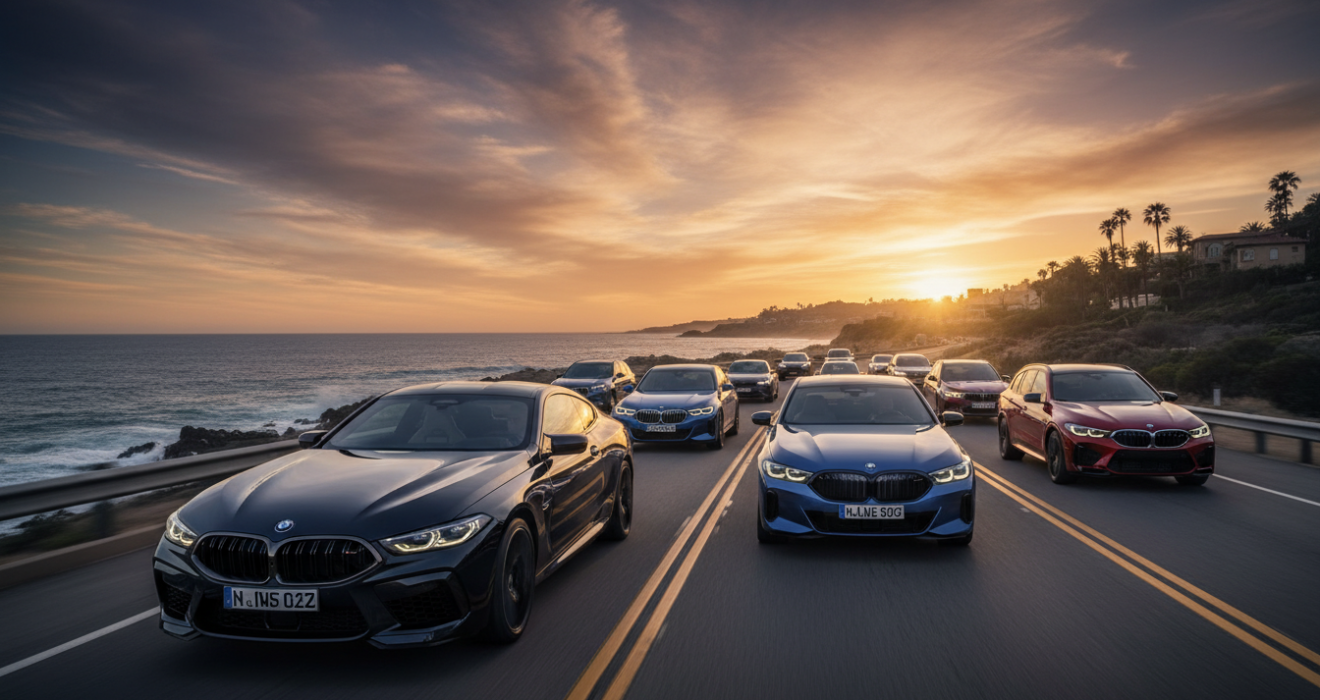
Ultimate Guide to BMW Cars: Models, Performance & Features
The Ultimate Analysis of BMW Cars in 2024 and Beyond
As an automotive journalist and test driver with over fifteen years of experience behind the wheel of Bavarian machinery, I have witnessed the evolution of BMW cars from analog driver’s instruments to sophisticated, digital powerhouses. The ethos of the “Ultimate Driving Machine” has shifted, adapted, and remarkably, survived the transition into the modern era. Consequently, navigating the current lineup requires more than just a brochure; it demands deep, experiential knowledge of chassis dynamics, engine codes, and software architectures. In this extensive guide, I will dissect the current landscape of BMW automobiles, offering unique insights you won’t find on a spec sheet.
Executive Summary: BMW Lineup at a Glance
Before diving into the granular details of specific BMW cars, the table below provides a high-level overview of the primary categories available today. Furthermore, this summary highlights the target demographic for each series, ensuring you can quickly identify which vehicle aligns with your lifestyle.
| Series/Model Category | Primary Characteristics | Ideal Driver Profile | Key Competitors |
|---|---|---|---|
| 3 Series / 4 Series | Benchmark sports sedans/coupes, balanced handling. | Enthusiasts seeking daily drivability. | Audi A4, Mercedes C-Class |
| 5 Series / 6 Series | Executive comfort, advanced tech, engaging dynamics. | Business professionals, long-distance commuters. | Audi A6, Mercedes E-Class |
| 7 Series / 8 Series | Flagship luxury, cutting-edge innovation, presence. | Executives, chauffeur-driven owners. | Mercedes S-Class, Lexus LS |
| X Models (SUVs) | SAV (Sports Activity Vehicle) versatility, xDrive AWD. | Families, outdoor adventurers. | Audi Q-Series, Mercedes GLE/GLS |
| M Division | Track-ready performance, high-output engines. | Hardcore enthusiasts, track-day drivers. | AMG, Audi RS, Porsche |
| i Series (EV) | Electric propulsion, sustainable materials, silence. | Tech-forward early adopters, eco-conscious. | Tesla, Lucid, Mercedes EQ |
Understanding the Nomenclature of BMW Cars
To the uninitiated, the naming convention of BMW cars can appear cryptic. However, once decoded, it reveals a logical hierarchy that has served the brand for decades. Generally, the first digit represents the chassis size or market segment. For instance, odd numbers (1, 3, 5, 7) typically denote traditional sedans or wagons, whereas even numbers (2, 4, 6, 8) are reserved for coupes, convertibles, or “Gran Coupes”—sedans with coupe-like rooflines.
Moreover, the subsequent two digits historically represented engine displacement. A 328i used to mean a 3-Series with a 2.8-liter engine. Currently, however, this has changed due to turbocharging. Now, these numbers indicate the performance hierarchy within the series. A 330i and a 530i share the same 2.0-liter turbocharged four-cylinder engine (the B48), despite the different chassis. Furthermore, the suffix details the powertrain: “i” for fuel-injected gasoline, “d” for diesel, and “e” for plug-in hybrid.
The Significance of xDrive and sDrive
Crucially, understanding the drivetrain is vital for performance. sDrive refers to two-wheel drive—traditionally rear-wheel drive (RWD) for most BMW cars, although front-wheel drive (FWD) has crept into entry-level models like the 2 Series Gran Coupe. Conversely, xDrive is BMW’s intelligent all-wheel-drive system. From my experience testing these systems in the snow-covered Alps, xDrive is rear-biased, meaning it preserves the sporting character of the car while providing necessary traction. Therefore, for those living in colder climates, prioritizing an xDrive model is usually the prudent choice.
Top BMW Sedans for Executive Comfort
The sedan remains the heart and soul of the Bavarian lineup. Despite the global shift toward SUVs, the engineering prowess of BMW is most palpable in their three-box designs. These vehicles offer lower centers of gravity, superior aerodynamics, and a driving connection that taller vehicles struggle to replicate.
The BMW 3 Series Legend
The 3 Series is not just a car; it is an institution. For over 40 years, it has defined the sports sedan segment. The current generation, the G20, is a return to form after the somewhat softer F30 generation. Driving the M340i specifically reveals a chassis that communicates road texture without being punishing. The steering, while electrically assisted, is precise and weighty.
Under the hood of the M340i lies the B58 engine—a 3.0-liter turbocharged inline-six. In my professional opinion, this is one of the greatest engines currently in production. It is smooth, relentlessly powerful, and surprisingly efficient. Furthermore, the ZF 8-speed automatic transmission paired with it anticipates gear changes so telepathically that manual paddles often feel redundant. For buyers seeking the quintessential experience of BMW cars, the 3 Series remains the gold standard.
The 5 Series Innovation
Stepping up to the 5 Series, we enter the realm of the “Business Athlete.” The recently launched G60 generation has grown significantly in size, now rivaling older 7 Series models in length. Consequently, the interior space is generous, and the ride quality borders on hovercraft-like smoothness. However, despite its size, the 5 Series retains agility.
Technology takes center stage here. The 5 Series often introduces features that trickle down to lesser models later. For example, the Highway Assistant allows for hands-free driving at speeds up to 85 mph on varying highways, provided the driver remains attentive. Additionally, the interior material quality has seen a shift toward sustainable, vegan alternatives dubbed “Veganza,” which feel remarkably like premium leather.
The 7 Series Flagship Luxury
At the apex of the sedan lineup sits the 7 Series. This vehicle is a technological tour de force. The latest iteration features polarizing styling, characterized by the massive illuminated kidney grille and split headlight design. While the exterior is debated, the interior is universally praised. The optional 31-inch Theater Screen, which descends from the roof to entertain rear passengers, transforms the car into a mobile cinema.
Moreover, the suspension technology in the 7 Series utilizes active roll stabilization and road-scanning cameras to pre-condition the dampers for bumps before the wheels even hit them. Driving this car feels less like operating a machine and more like commanding a vessel. It isolates you from the outside world completely, which is the ultimate goal of luxury motoring.
Leading BMW SUVs and Crossovers
The “X” models, or Sports Activity Vehicles (SAVs) as BMW prefers to call them, now account for the majority of sales. Unlike traditional body-on-frame trucks, these are unibody constructions that prioritize on-road handling. Nevertheless, they possess surprising off-road capabilities when pushed.
X1 and X3 Compact Versatility
The entry-level X1 has evolved into a sophisticated, spacious subcompact. It now rides on a front-wheel-drive-based architecture, which maximizes interior volume. However, the X3 remains the sweet spot for many. Built on the rear-drive-based CLAR platform, the X3 drives very similarly to a 3 Series but offers the commanding view of the road that modern buyers crave.
The X3 M50 (formerly M40i) is particularly noteworthy. It blends the practicality of a family hauler with the 0-60 mph times of a dedicated sports car. During my long-term test of an X3, I found it to be the perfect “one-car solution” for enthusiasts with families. It handles canyon carving and Costco runs with equal aplomb.
The X5 SAV and X7 Grandeur
The X5 is the vehicle that saved BMW in the late 1990s. Today, it remains a benchmark. The current model offers a plug-in hybrid variant, the X5 xDrive50e, which provides roughly 40 miles of pure electric range. This allows many owners to commute without using a drop of gasoline, reserving the combustion engine for longer trips. Consequently, it bridges the gap between traditional motoring and the electric future seamlessly.
On the other hand, the X7 is a true seven-seater. Unlike many competitors where the third row is a penalty box, the X7 offers usable space for adults in the back, provided the middle row is adjusted forward. The ride quality in the X7 is arguably superior to the 7 Series sedan due to the longer suspension travel inherent in an SUV design.
The M Division: High-Performance BMW Vehicles
For those who bleed high-octane fuel, the M Division represents the pinnacle of automotive engineering. These are not merely BMW cars with body kits; they are fundamentally re-engineered machines. The chassis is stiffened, the cooling systems are upgraded for track abuse, and the suspension geometry is completely revised.
M3 and M4 Track Capabilities
The M3 (sedan) and M4 (coupe) feature the S58 engine, a twin-turbocharged inline-six capable of producing over 500 horsepower in Competition trim. What makes the modern M3 fascinating is the introduction of M xDrive. Traditionally, M cars were strictly rear-wheel drive. However, with horsepower figures climbing rapidly, RWD became a limiting factor for acceleration.
The M xDrive system allows the driver to switch modes. You can have the security of AWD for lap times or, with a few button presses, disconnect the front axle entirely to drift in RWD mode. This duality makes the M3/M4 arguably the most versatile sports cars on the market. For detailed safety ratings on these high-performance machines, you can reference the IIHS safety ratings to see how they perform in crash tests.
The M5 Super Sedan
The M5 is the grandfather of the super sedan segment. The latest generation has embraced hybridization to boost performance. While this has added weight, the instant torque fill from the electric motor eliminates any hint of turbo lag. The M5 is a ballistic missile in a tuxedo—understated styling masking supercar performance. It is designed to cross continents at triple-digit speeds without fatiguing the driver.
Electric Future: The i Series BMW Cars
BMW has taken a unique approach to electrification. Rather than building dedicated EV platforms for all models (like Mercedes with the EQ line), BMW often uses flexible architectures that can accommodate gas, diesel, hybrid, or electric powertrains. This strategy ensures that the electric versions look and feel like traditional BMW cars.
i4 and i7 Electric Sedans
The i4 is essentially an electric 4 Series Gran Coupe. Because it shares the chassis, it retains the sporty driving position and handling characteristics of its gasoline counterpart. The i4 M50 was the first electric car tuned by the M division. While it lacks the visceral sound of an engine, the sheer violence of its acceleration is addictive.
Similarly, the i7 is the electric twin of the 7 Series. In my experience, the electric powertrain suits the luxury flagship character perfectly. The silence of the electric motors complements the sound insulation, creating a rolling sensory deprivation tank. Furthermore, the instant torque makes moving such a heavy vehicle feel effortless.
The iX Electric SUV
The iX is the outlier. It utilizes a bespoke carbon-fiber-reinforced plastic (CFRP) chassis tech derived from the i3 and i8. The interior of the iX is a departure from tradition, featuring a lounge-like atmosphere with open-pore wood and crystal controls. It is a polarization design, but it proves that BMW is willing to take risks. Range anxiety is minimized here, with real-world testing often exceeding EPA estimates.
Technology and Infotainment in Modern BMWs
The digital experience is now as important as the driving experience. BMW’s iDrive system has been the industry standard for infotainment for years, though the learning curve has steepened with recent iterations.
iDrive 8 and Curved Displays
The latest iDrive 8 and 8.5 systems utilize a massive curved display that merges the digital instrument cluster and the central infotainment screen into one continuous glass panel. Visually, it is stunning. The graphics are crisp, and the processing speed is lightning fast. However, the migration of climate controls into the touchscreen has been a point of contention. Adjusting the heated seats now requires navigating a menu rather than pressing a physical button. Therefore, utilizing the “Hey BMW” voice assistant has become necessary for basic functions while driving.
Driver Assistance Systems
BMW’s Driving Assistance Professional Package is a must-have option. It includes active cruise control with stop-and-go and lane-keeping assistants that are among the smoothest in the industry. Unlike some systems that ping-pong between lane markers, the BMW system centers the car confidently. For more context on how these systems compare across the industry, Consumer Reports offers excellent comparative data on active safety tech.
Maintenance and Ownership of BMW Automobiles
Owning BMW cars requires a different mindset than owning a Japanese economy car. These are precision machines with tight tolerances. Preventative maintenance is key. Following the manufacturer’s recommended 10,000-mile oil change interval is, in my expert opinion, too long if you plan to keep the car past the warranty period. I recommend intermediate oil changes at 5,000 miles.
Common issues in modern BMWs are far fewer than in the early 2000s. The cooling system plastics are more durable, and the electronics are more robust. However, consumables like tires and brakes are expensive. Run-flat tires, standard on most models, are costly to replace and often result in a harsher ride. Many enthusiasts swap these for standard non-run-flat tires and carry a mobility kit.
Furthermore, depreciation is a factor. Luxury sedans depreciate steeply. However, SUVs (X models) tend to hold their value better. Leasing is a very popular route for BMW customers, as it insulates the driver from depreciation and out-of-warranty repair costs. For reliability metrics, referencing J.D. Power serves as a good baseline for long-term expectations.
Buying Guide: Choosing the Right Bavarian Motor Works Model
Selecting the right model involves an honest assessment of your needs. If you prioritize driving dynamics above all else, the 2 Series Coupe or the 3 Series are the correct choices. If you need family practicality but refuse to drive a “mom car,” the X3 or X5 are exceptional. For those looking to make a statement, the 7 Series or XM SUV are unrivaled.
Additionally, consider the Certified Pre-Owned (CPO) market. A two or three-year-old BMW often has taken the biggest depreciation hit but still looks and drives like new, while offering an extended warranty. When researching comparisons between BMW and other luxury marques, you can find detailed automotive insights at BlissLifes automotive section, which covers a broad spectrum of car reviews and tips.
Conclusion
In conclusion, the current lineup of BMW cars is the most diverse in the company’s history. From electric city cars to twin-turbo V8 monsters, there is a Bavarian machine for every type of driver. While the steering feel may not be as communicative as the hydraulic racks of the 1990s, the performance envelope has expanded exponentially. The brand has successfully navigated the transition to digital luxury while keeping a distinct sporting flavor that separates it from Audi and Mercedes-Benz.
Ultimately, a BMW is still a driver’s car. It rewards smooth inputs and encourages spirited driving. Whether you choose the efficiency of an i4 or the brutality of an M3, the DNA remains consistent: joy in the act of driving.
Frequently Asked Questions (FAQ)
1. Are BMW cars expensive to maintain?
Yes, compared to non-luxury brands. Parts and specialized labor command a premium. However, modern BMWs (post-2016) have shown significantly improved reliability compared to previous generations. An independent specialist mechanic can save you 30-50% over dealership service rates.
2. What does BMW stand for?
BMW stands for Bayerische Motoren Werke, which translates to Bavarian Motor Works. The company originated as an aircraft engine manufacturer, which is often mistakenly thought to be the inspiration for the blue and white roundel logo (which actually represents the Bavarian flag colors).
3. Is xDrive better than Audi Quattro?
This is subjective. Quattro is often mechanically based and excellent for deep snow traction. xDrive is electronically controlled and rear-biased, offering a sportier feel on dry pavement while still providing excellent grip in inclement weather. Both are top-tier systems.
4. Which BMW engine is the most reliable?
Currently, the B58 3.0-liter inline-six engine is widely regarded as the gold standard for reliability and performance. It is used in everything from the M340i to the X5 and even the Toyota Supra.
5. How long do electric BMW batteries last?
BMW offers a warranty on high-voltage batteries typically for 8 years or 100,000 miles. Real-world data suggests these batteries can last well beyond 150,000 miles with only minor degradation in range.
1 Comment
Pingback: BMW M4 Review: The Ultimate Driving Machine Evolved - Bliss Lifes