
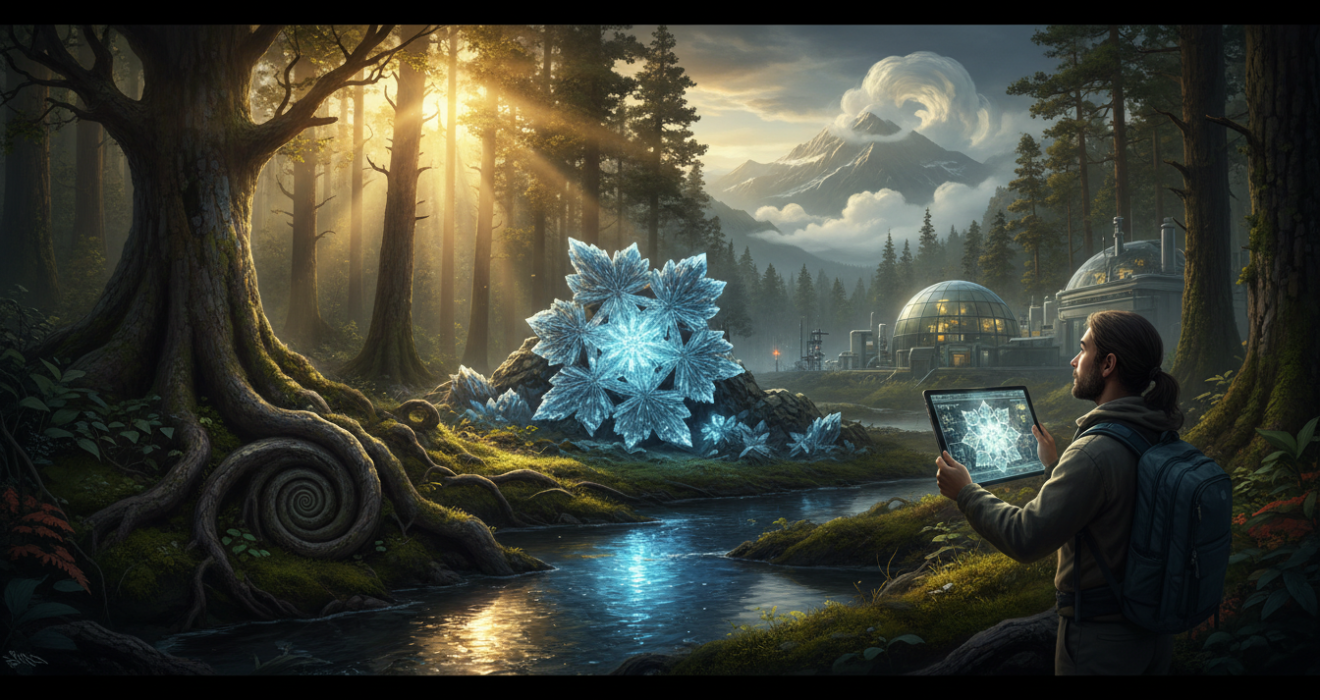
Unlocking the Beauty of Nature: Science, Fractals & Awe
Unlocking the Beauty of Nature: Science, Fractals & Awe
Nature has always been a source of wonder, inspiration, and mystery. From towering mountains to delicate snowflakes, every part of the natural world carries a unique beauty that captures human attention. But what if this beauty is not random? What if there is a deeper scientific pattern behind everything we admire?
In this article, we will explore how science explains the beauty of nature, how fractals shape the world around us, and why humans feel a deep sense of awe when connecting with nature.
The Timeless Beauty of Nature
Nature’s beauty is universal. Whether you are looking at a sunset, walking through a forest, or watching ocean waves, there is something deeply calming and powerful about it.
This beauty comes from:
Balance and harmony
Repeating patterns
Natural symmetry
Color combinations
Humans are naturally drawn to these elements because our brains are wired to recognize order and structure.
Science Behind Nature’s Beauty
Science helps us understand that nature is not just beautiful—it is mathematically organized.
Everything in nature follows certain rules:
Plants grow in patterns to maximize sunlight
Rivers flow based on physics and terrain
Animals evolve shapes for survival
Even something as simple as a leaf has a structured design that allows it to function efficiently.
Why Does Nature Look So Perfect?
The answer lies in:
Efficiency
Adaptation
Mathematical precision
Nature doesn’t create beauty for decoration—it creates it as a result of optimization and survival.
What Are Fractals?
Fractals are one of the most fascinating concepts in nature.
A fractal is a pattern that repeats itself at different scales. This means:
A small part looks similar to the whole
Patterns repeat infinitely
Examples of Fractals in Nature:
Fern leaves
Snowflakes
Coastlines
Trees and branches
Lightning patterns
If you zoom in or out, the structure remains similar. This repetition creates the visually pleasing patterns we see in nature.
Fractals in Everyday Life
You don’t need to be a scientist to notice fractals. They are everywhere around you.
1. Trees
Branches split into smaller branches, and those into even smaller ones. The structure repeats itself.
2. Mountains
Rough edges and shapes appear similar whether viewed from far or close.
3. Rivers
Streams branch into smaller streams in repeating patterns.
4. Clouds
Cloud formations often show repeating, self-similar shapes.
This is why nature feels organized yet unpredictable at the same time.
Why Humans Love Fractals
There is a psychological reason why fractals are so appealing.
Studies suggest that:
The human brain processes fractals easily
They reduce stress
They create a sense of familiarity
This is why:
Looking at nature feels relaxing
Natural landscapes reduce anxiety
People prefer natural designs over artificial ones
Fractals create a balance between complexity and simplicity, which our minds find satisfying.
The Feeling of Awe in Nature
Have you ever stood in front of a mountain or watched a star-filled sky and felt speechless?
That feeling is called awe.
Awe happens when:
We experience something vast
We encounter something beyond understanding
We feel small compared to something greater
Why Awe Matters
Awe has powerful effects:
Reduces stress
Increases happiness
Improves mental health
Expands thinking
Nature is one of the strongest sources of awe because it constantly reminds us of something bigger than ourselves.
Nature and Human Connection
Humans are deeply connected to nature, even in modern life.
This connection is known as biophilia, which means:
Humans have a natural desire to connect with nature.
That’s why:
People enjoy parks and gardens
Natural views improve productivity
Outdoor activities boost mood
Even adding plants to a room can improve mental well-being.
Nature as an Artist
Nature can be seen as the greatest artist.
Look at:
The colors of a sunset
The symmetry of flowers
The patterns of animal skins
All of these are created without human intervention, yet they rival the greatest works of art.
Nature combines:
Mathematics
Physics
Chemistry
Time
To create something truly breathtaking.
Mathematics Hidden in Nature
Nature follows mathematical principles that explain its beauty.
The Fibonacci Sequence
This is one of the most famous patterns in nature.
It appears in:
Flower petals
Pinecones
Sunflowers
Each number is the sum of the previous two, creating a spiral pattern.
Golden Ratio
This ratio is often found in:
Shells
Leaves
Human faces
It creates proportions that are visually pleasing.
Chaos and Order in Nature
Nature is not always predictable. It balances between:
Order (patterns and symmetry)
Chaos (randomness and change)
This balance makes nature:
Dynamic
Interesting
Alive
For example:
Waves are repetitive but never identical
Weather follows patterns but can change suddenly
This combination keeps nature from being boring.
How Nature Inspires Innovation
Many modern designs are inspired by nature.
This is called biomimicry.
Examples:
Airplane wings inspired by birds
Buildings designed like termite mounds
Velcro inspired by plant burrs
Nature has already solved many problems, and humans are learning from it.
Nature and Mental Health
Spending time in nature is not just enjoyable—it is necessary.
Benefits:
Reduces stress
Improves focus
Boosts creativity
Enhances mood
Even a short walk in nature can have powerful effects on your mind.
The Importance of Protecting Nature
Understanding nature’s beauty should lead to protecting it.
Why It Matters:
Nature supports life
Provides clean air and water
Maintains ecological balance
However, threats like:
Pollution
Deforestation
Climate change
Are putting this beauty at risk.
Protecting nature means protecting our future.
How to Experience Nature’s Beauty More Deeply
You don’t need to travel far to connect with nature.
Simple Ways:
Take a walk outdoors
Observe patterns in leaves and clouds
Watch sunsets regularly
Spend time away from screens
Practice mindfulness in natural settings
The more attention you give, the more beauty you will notice.
FAQs
1. What are fractals in simple words?
Fractals are repeating patterns that look similar at different sizes. They are commonly found in nature like trees, clouds, and snowflakes.
2. Why is nature considered beautiful?
Nature is beautiful because of its balance, symmetry, patterns, and colors, which our brains naturally find pleasing.
3. How does nature reduce stress?
Nature calms the mind by lowering cortisol levels, improving mood, and helping the brain relax.
4. What is the connection between math and nature?
Nature follows mathematical patterns like the Fibonacci sequence and fractals, which create structure and harmony.
5. What is awe in nature?
Awe is the feeling of wonder and amazement when experiencing something vast or powerful, like mountains or stars.
Conclusion
Nature is not just something we see it is something we experience, feel, and are deeply connected to. Its beauty is not accidental but rooted in science, mathematics, and patterns like fractals that create harmony and balance.
At the same time, nature inspires awe, reminding us of the vastness of the world and our place within it. This combination of logic and emotion makes nature one of the most powerful forces in our lives.